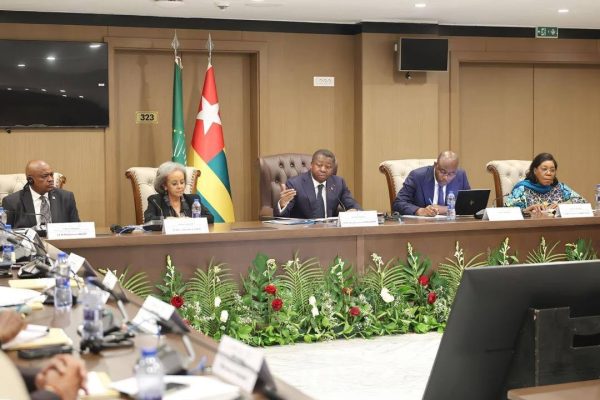
Lomé served as the diplomatic stage on June 8, 2026, hosting a high-level gathering focused on reshaping African mediation strategies for the escalating crisis in the Democratic Republic of the Congo (DRC) and the broader Great Lakes region. Led by Faure Essozimna Gnassingbé, designated mediator by the African Union, the meeting centered on a critical objective: streamlining peace initiatives that have historically operated in silos.
The conference convened key facilitators appointed by the African Union, alongside representatives from the United Nations, the East African Community (EAC), the Economic Community of Central African States (ECCAS), the Southern African Development Community (SADC), the International Conference on the Great Lakes Region (ICGLR), and the International Committee of the Red Cross (ICRC). Their collective presence underscored the intricate web of regional frameworks, institutional mandates, and overlapping diplomatic endeavors that define this intractable conflict.
Structuring a fragmented peace process
This semi-annual meeting in Lomé followed up on discussions held earlier this year, where the focus was on aligning mediation structures and reinforcing the peace process. During the session, Faure Gnassingbé highlighted measurable progress in organizing the mediation architecture, shifting the emphasis from quantity to quality. “The challenge is no longer about launching more initiatives,” he noted, “but ensuring they are coherent, visible, and effective on the ground.”
A persistent hurdle in protracted conflicts is the lack of coordination among numerous actors, which often dilutes diplomatic efforts. The Lomé meeting aimed to address this by fostering a more unified approach, where initiatives are not only better aligned but also carry greater impact.
Championing African-led dialogue
Faure Gnassingbé reiterated his commitment to the mission, emphasizing the need for sustained collective action to stabilize eastern DRC, where ongoing violence and armed clashes continue to devastate civilian lives. His strategy hinges on inclusive dialogue, positioning African-driven solutions as the cornerstone of mediation while maintaining ties with global initiatives. This approach seeks to eliminate redundancy and bolster the credibility of the peace process.
Participants praised his leadership, noting that it has reinvigorated trust among stakeholders and harmonized their approaches. Success, they agreed, depends on a well-defined structure, clearly assigned responsibilities, and rigorous monitoring of commitments.
Actionable roadmap for the coming months
The Lomé gathering yielded tangible outcomes, including decisions to enhance coordination between the Mediator’s Office, the facilitators’ panel, the African Union Commission, and the independent joint secretariat. A key priority is to develop a more structured African contribution to the Washington and Doha processes, ensuring regional actors take ownership and implementation becomes seamless.
Additionally, states and organizations involved were urged to deepen cooperation within the framework established in Lomé on January 17, 2026. A 15-day deadline was set to finalize an operational action plan, translating these resolutions into concrete measures. The goal is to ensure that diplomatic momentum translates into visible change on the ground.
Lomé’s growing role in regional diplomacy
The summit reaffirmed Lomé’s emerging prominence as a diplomatic hub for DRC-related peace talks. The Togo capital is increasingly seen as a convergence point for discussions on stability in the Great Lakes, offering a neutral platform for complex negotiations.
The true test of this mediation effort lies in its ability to deliver tangible results. In a crisis as entrenched and fluid as this one, success will be measured not by the volume of discussions but by the ability to keep stakeholders engaged and advance a shared roadmap—step by step.