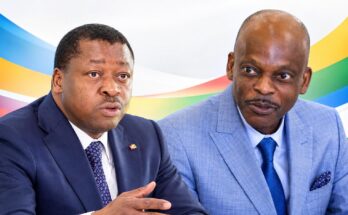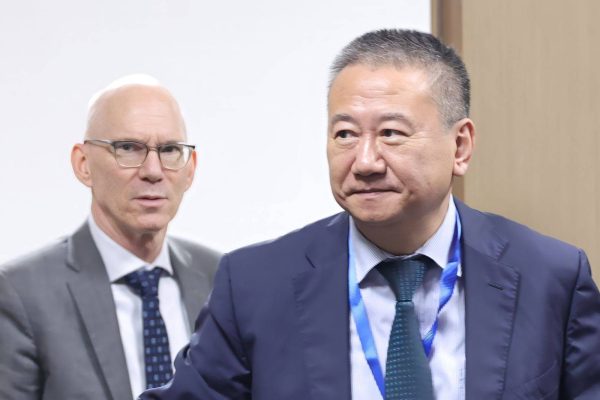
Council president Faure Essozimna Gnassingbé welcomed two senior United Nations officials to Lomé on Monday, 8 June 2026, to discuss the ongoing crisis in the eastern Democratic Republic of the Congo (DRC). The visitors were James Swan, the UN secretary-general’s special representative for the DRC and head of MONUSCO, and Huang Xia, the UN special envoy for the Great Lakes region. The meeting was part of the half-yearly review of the African Union’s mediation efforts.
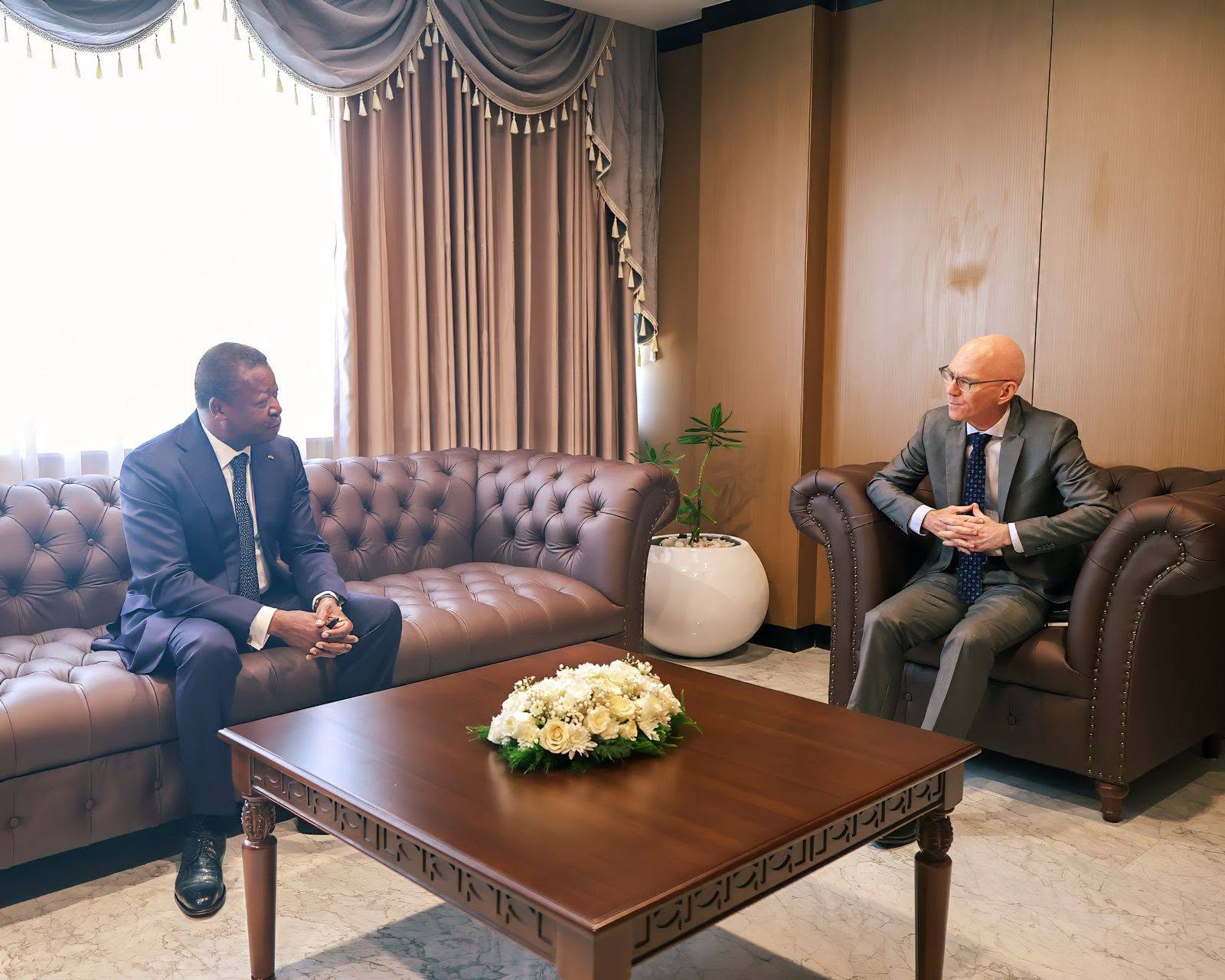
Discussions focused on mediation
The talks centred on the progress of current diplomatic initiatives and the role of the United Nations in supporting African mediation. In Lomé, the participants reviewed ongoing efforts to align positions and sustain a dialogue framework for a matter that remains politically and security-sensitive.
Furthermore, the simultaneous presence of the UN envoys and the AU-appointed mediator highlights an essential reality: resolving the eastern DRC crisis requires improved coordination between African and international actors. In this context, Lomé is positioning itself as a diplomatic convergence point.
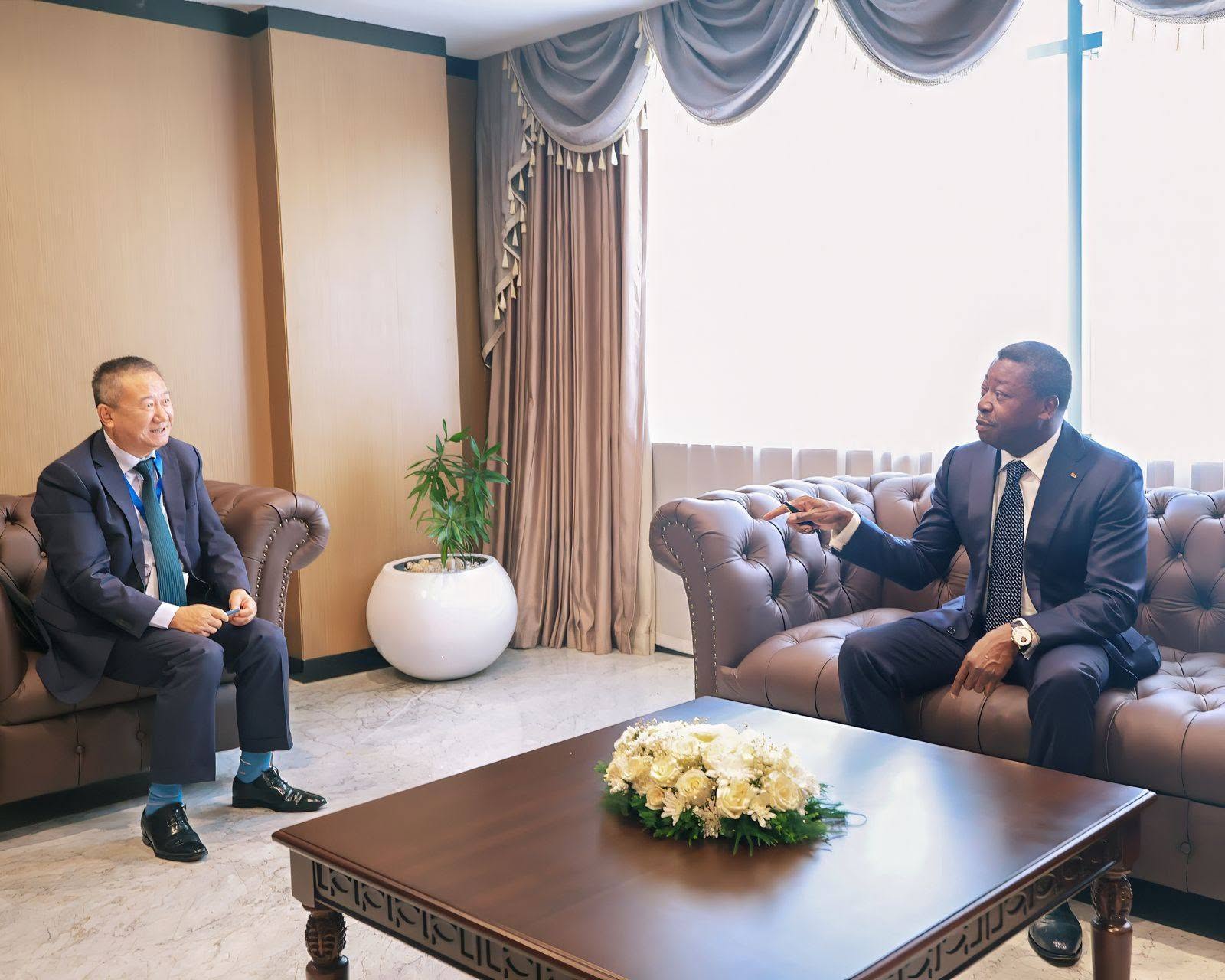
Togo aims to capitalise on its role
During the meeting, the UN representatives commended Togo’s commitment to peace and stability in Africa. They reaffirmed their readiness to support efforts led by Faure Gnassingbé to achieve a durable and balanced resolution to the crisis.
This stance underscores the growing appreciation for Togo’s approach, which relies on regular consultations, diplomatic discretion, and a search for consensus among stakeholders. For Lomé, the challenge now is to translate this recognition into tangible influence over the Great Lakes dossier.
Coordination becomes essential
Consultations between the African mediator and the United Nations are not new, but they carry particular weight amid persistent violence in eastern Congo. Both sides aim to maintain a coordinated approach to avoid fragmentation of peace efforts.
This dynamic meets a simple requirement: multiplying initiatives is not enough if they lack alignment. By hosting these UN envoys, Faure Gnassingbé seeks to reinforce a more coherent diplomatic architecture that can bring regional and international actors together behind a shared objective.
Lomé as a diplomatic platform
Monday’s meeting confirms Lomé’s position as a venue for dialogue on the Congo crisis. Togo, which regularly hosts consultations linked to African mediation, aims to turn this visibility into an asset for finding political solutions to regional conflicts.
The key question now is whether this strengthened coordination between the African Union and the United Nations will yield concrete progress. In a long and complex crisis, the value of mediation lies in its ability to sustain stakeholder engagement and gradually shape conditions for a lasting agreement.