The Minister of Agriculture, Livestock, and Fisheries, Adin Yeton Bloukounon Goubalan, recently concluded an intensive three-day national tour. Traversing central to northern regions of the country, the executive’s message was unequivocal: Benin must cease exporting raw commodities and instead process its agricultural output domestically. This strategic shift aims to bolster the nation’s food security and generate significant wealth.
The Beninese government has embarked on a demanding race against time to modernize its agricultural sector. Between June 11 and 13, Minister Adin Yeton Bloukounon Goubalan visited several key agricultural hubs, including Paouignan, Glazoué, and Parakou. The primary objective of this extensive journey was to personally ensure that the head of state’s vision – a definitive break from raw product exports – translates into tangible industrial reality across the country.
Rice and cassava: charting a course for food independence
A significant stride towards self-sufficiency is evident within the rice sector. In Glazoué, the agro-industrial group Premium, already a prominent player in paddy rice processing, announced a substantial acceleration of its investments. A third processing unit is currently under construction in Dangbo. This new industrial facility is set to increase the group’s overall capacity from 300,000 to an impressive 500,000 tons of rice annually, offering a crucial lifeline to reduce Benin’s reliance on imported Asian rice.
Meanwhile, in Paouignan, the focus is on the subterranean ‘white gold’: cassava. Construction of a new local processing plant is nearing completion. This industrial complex will produce gari, tapioca, and, crucially, panifiable flour – a vital alternative to reduce wheat imports. The innovation lies in its unique management model: an unprecedented co-management structure involving both the private sector and local producer groups. This approach is designed to ensure equitable profit distribution and secure rural employment opportunities, a key aspect of African society news focusing on sustainable development.
Cashew: cracking down on illicit trade
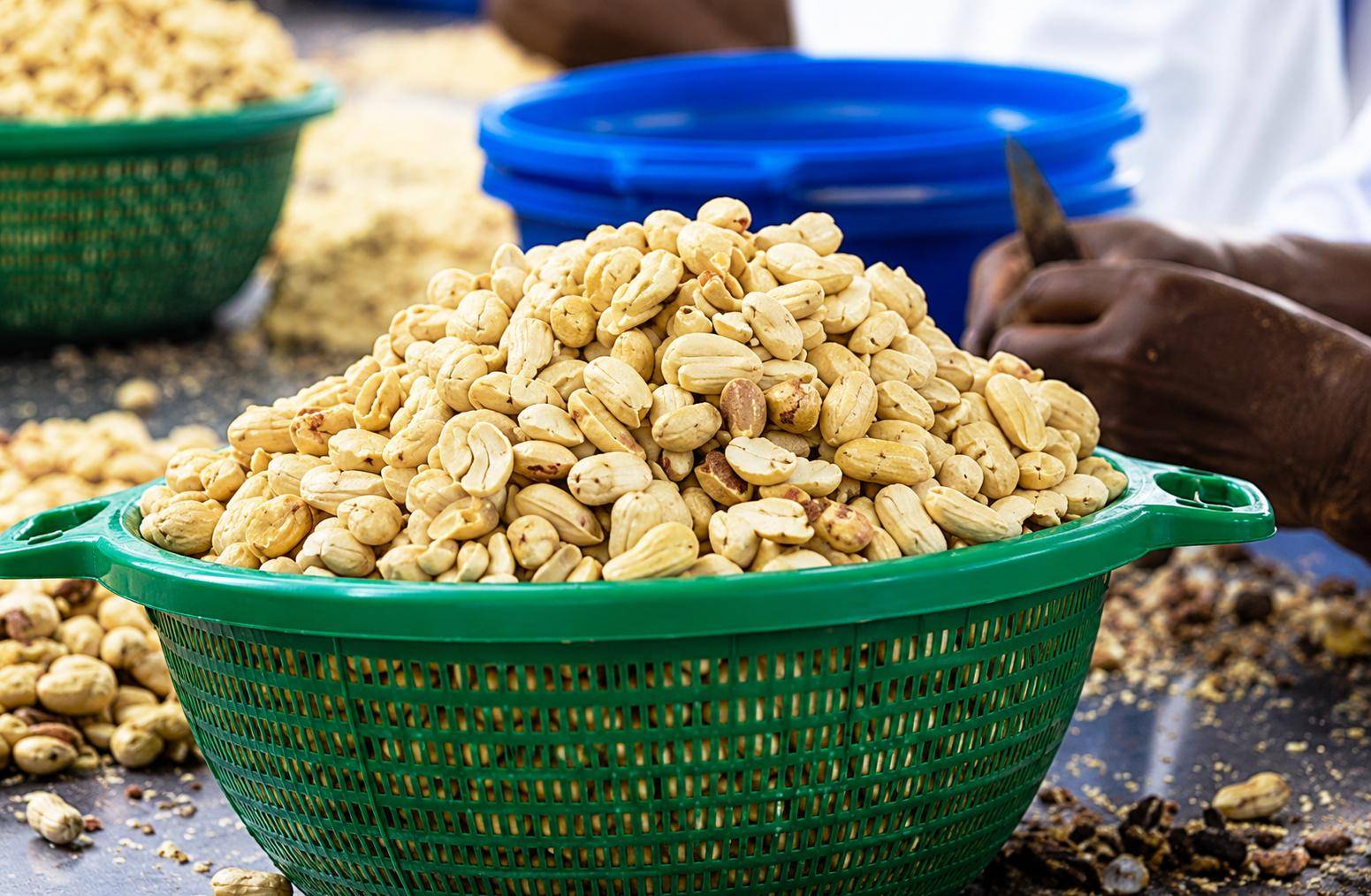
While local processing is advancing, it faces a considerable challenge: the consistent availability of raw materials. In the cashew sector, local processors are raising alarms over the rampant smuggling of raw cashew nuts into neighboring countries, undermining domestic value addition.
Minister Goubalan demonstrated unwavering resolve on this issue. The government is committed to strengthening border controls and prioritizing the allocation of raw cashew stocks to factories operating within national territory. For the executive, allowing raw nuts to leave Benin is tantamount to exporting jobs meant for young Beninese citizens, a critical point in Africa politics English discussions.
Cotton: aiming for 700,000 tons with bonus incentives
The tour concluded with a review of Benin’s most economically sensitive agricultural segment: cotton. Following three consecutive seasons marked by declining production, the government is determined to revive the sector. An ambitious target of 700,000 tons has been set for the 2026-2027 campaign.
To re-energize producers and bolster their purchasing power amidst rising input costs, the President of the Republic has introduced a powerful incentive: an exceptional bonus of 10 FCFA per kilogram of cotton produced. This premium will be disbursed once the national threshold of 700,000 tons is achieved. This proactive measure is making African news today by highlighting Benin’s commitment to its agricultural backbone.
Through robust measures against smuggling, financial incentives for producers, and significant industrial projects, Benin is actively shaping a more resilient agricultural economy. While logistical and climatic hurdles remain, the political will driving this Benin agricultural transformation appears firmly established, promising a brighter future for the nation’s food sovereignty and economic growth.
Comments are closed, but trackbacks and pingbacks are open.