Cameroon charts ambitious course for modernizing national infrastructure
In its pursuit of development and enhanced infrastructure competitiveness, Cameroon is rolling out a series of initiatives aimed at upgrading its road, rail, urban, and airport facilities.
In its pursuit of development and enhanced infrastructure competitiveness, Cameroon is rolling out a series of initiatives aimed at upgrading its road, rail, urban, and airport facilities.
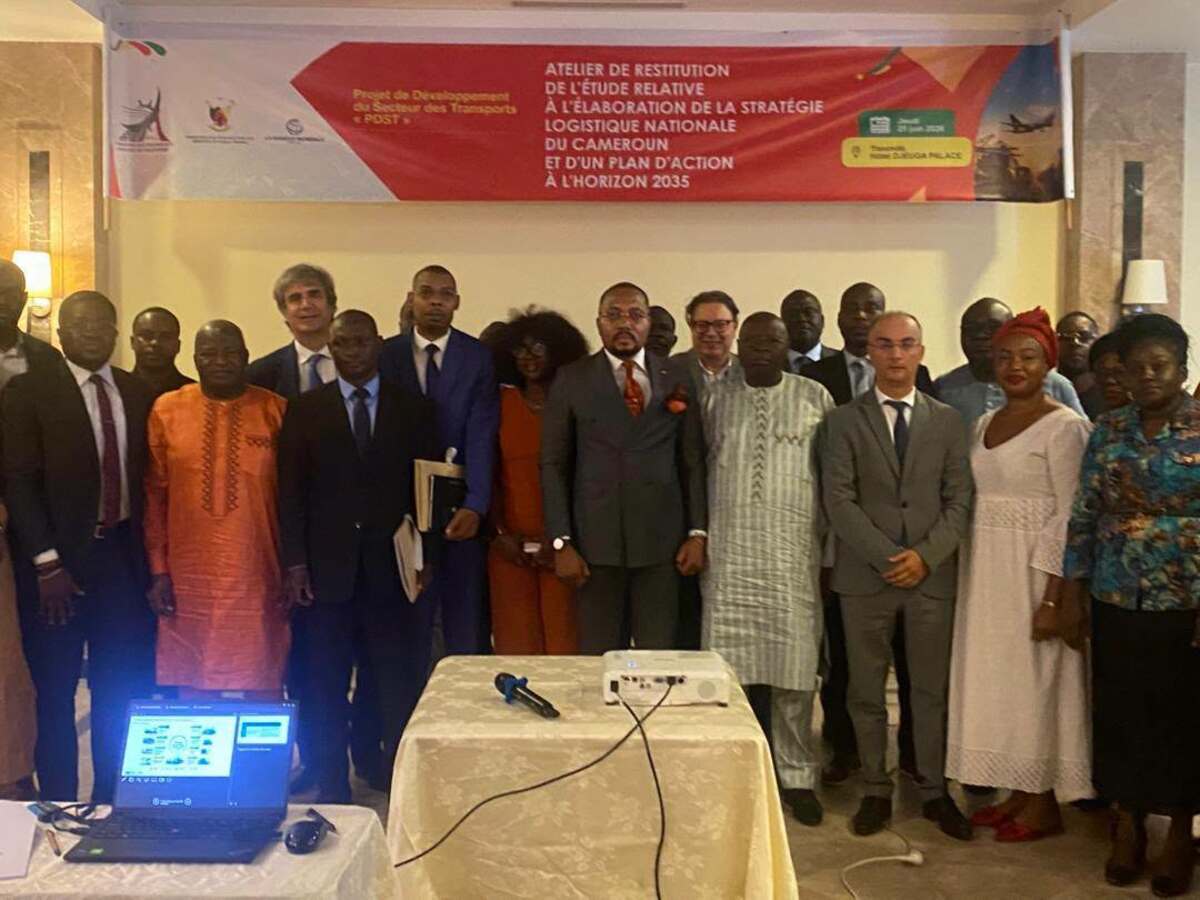
To advance this critical objective, a significant workshop was held on June 24 and 25, 2026. This gathering focused on presenting the feasibility studies for two pivotal projects: the establishment of a Terrestrial Transport Regulatory Agency (ARTT) and the formulation of a comprehensive National Logistics Strategy (SLN), complete with an action plan extending to 2035.
The proceedings brought together prominent figures, including Mbamome Nkendong Divine, the Director of Road Transport, and Claude Misse Ntone, the Director of Rail Transport. Also present were a team from the consulting firm Idea Consult International/TRT Studi Cameroun, alongside delegates from various partner government bodies and key financial institutions such as the World Bank and the African Development Bank, underscoring the collaborative effort behind this pan-African current affairs initiative.
During the opening remarks, the Director of Road Transport emphasized the importance of carefully considering the preliminary study conclusions, which are set to guide the effective implementation of these ambitious projects. The consultants subsequently delivered detailed presentations outlining their comprehensive findings.
The studies revealed that the proposed ARTT will be headquartered in Yaoundé. Its initial mandate will focus on regulating road transport, with plans for a phased expansion of its responsibilities. Establishing this new entity will require an estimated initial investment of 260 million FCFA. This capital will cover the development of its institutional framework, the fitting out and equipping of its premises, and the procurement of essential IT infrastructure for its operations. This represents significant African news today for the transport sector.
Meanwhile, the analysis for Cameroon’s National Logistics Strategy (SLN) delved into the core attributes of the nation’s logistics system. It identified key strategic challenges, outlined critical objectives, and ultimately proposed an 8-pillar action plan. This plan notably includes substantial railway investments, projected to cost approximately 40 billion euros. A National Logistics Council will also be established, tasked with fostering inter-ministerial coordination and dispute resolution.
Concluding the workshop, the Director of Road Transport commended the high quality of the contributions and the productive nature of the discussions. He urged all stakeholders to sustain their commitment, ensuring the successful progression of these foundational projects, which are crucial for the future of Cameroon’s terrestrial transport sector.
Comments are closed, but trackbacks and pingbacks are open.