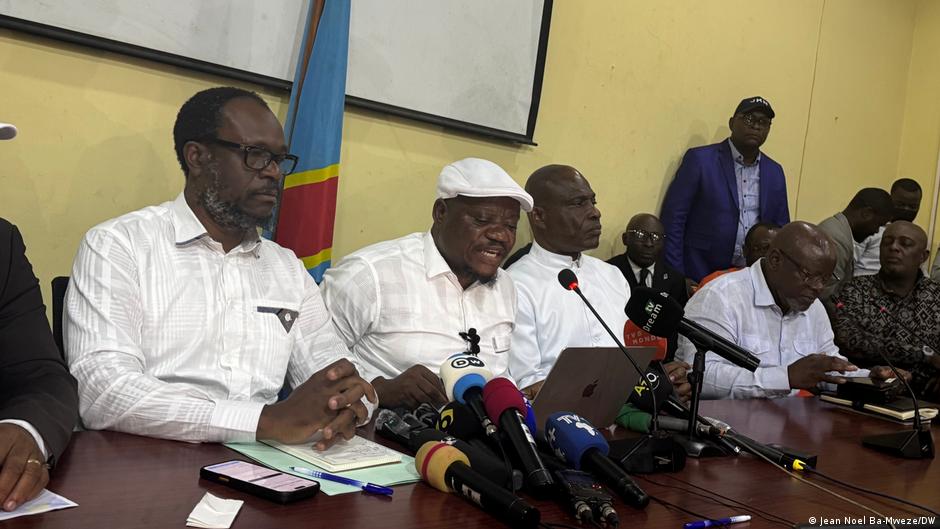
Congo’s Tshisekedi faces pressure as opposition coalition holds firm

In the Democratic Republic of the Congo, President Félix Tshisekedi has taken a tactical step by returning the constitutional referendum bill to Parliament for a second review, despite the Constitutional Court’s approval with reservations. This move comes as the ultimatum set by the opposition coalition Article 64 approaches its deadline this Saturday.
The C64 coalition, alongside over sixty civil society organizations, insists the president abandon his constitutional reform agenda by August 15 and shelve the referendum bill. They are also demanding an inclusive national dialogue. Yet, with the deadline just hours away, no date has been set for such discussions.
Tshisekedi’s tactical retreat under mounting pressure
Many anticipated the referendum law would automatically take effect due to the president’s failure to sign it within fifteen days, as stipulated by the Congolese Constitution. Instead, Tshisekedi opted to send the bill back to Parliament for further deliberation, incorporating the Constitutional Court’s observations.
Professor Bob Kabamba of the University of Liège in Belgium interprets this as a clear retreat by Tshisekedi, though it does not signal an abandonment of his efforts to extend his time in office beyond 2028, the end of his second term.
“We must not overlook the immense pressure from both domestic opposition and regional actors. These combined forces, along with internal consultations, have compelled Tshisekedi to backtrack, particularly by requesting a second review of the bill. This is a setback, yet it doesn’t diminish his determination to find alternative ways to remain in power past 2028,” Kabamba explains.
C64 vows continued resistance after August 15 deadline
The Article 64 coalition has acknowledged Tshisekedi’s move but remains steadfast in its demands. As the August 15 ultimatum nears, the coalition has not yet disclosed the specifics of its next actions.
Franklin Tshiamala, Secretary-General of Leadership for Governance and Development (LGD) under former Prime Minister Augustin Matata Ponyo, warns of decisive measures:
“At midnight on August 15, we will confirm that nothing has been done. We will announce major surgical operations—coordinated actions led by our C64 laboratory—to force this regime to restore our freedoms and protect our national sovereignty.”
Political standoff escalates
While the government maintains its position that the referendum process is a legitimate political and institutional initiative, it dismisses the C64 ultimatum as an illegitimate attempt to dictate state affairs. The regime asserts that no external pressure can dictate the president’s agenda.
“The ultimatum from C64 is theirs alone. It may appeal to their backers, but the Republic continues to function normally,” states Adolphe Amisi Makutano, a member of the Union for Democracy and Social Progress (UDPS), Tshisekedi’s party.
The coming days in the Democratic Republic of the Congo could mark a turning point in the nation’s political landscape as the standoff between the presidency and the opposition coalition reaches a critical phase.
Comments are closed, but trackbacks and pingbacks are open.