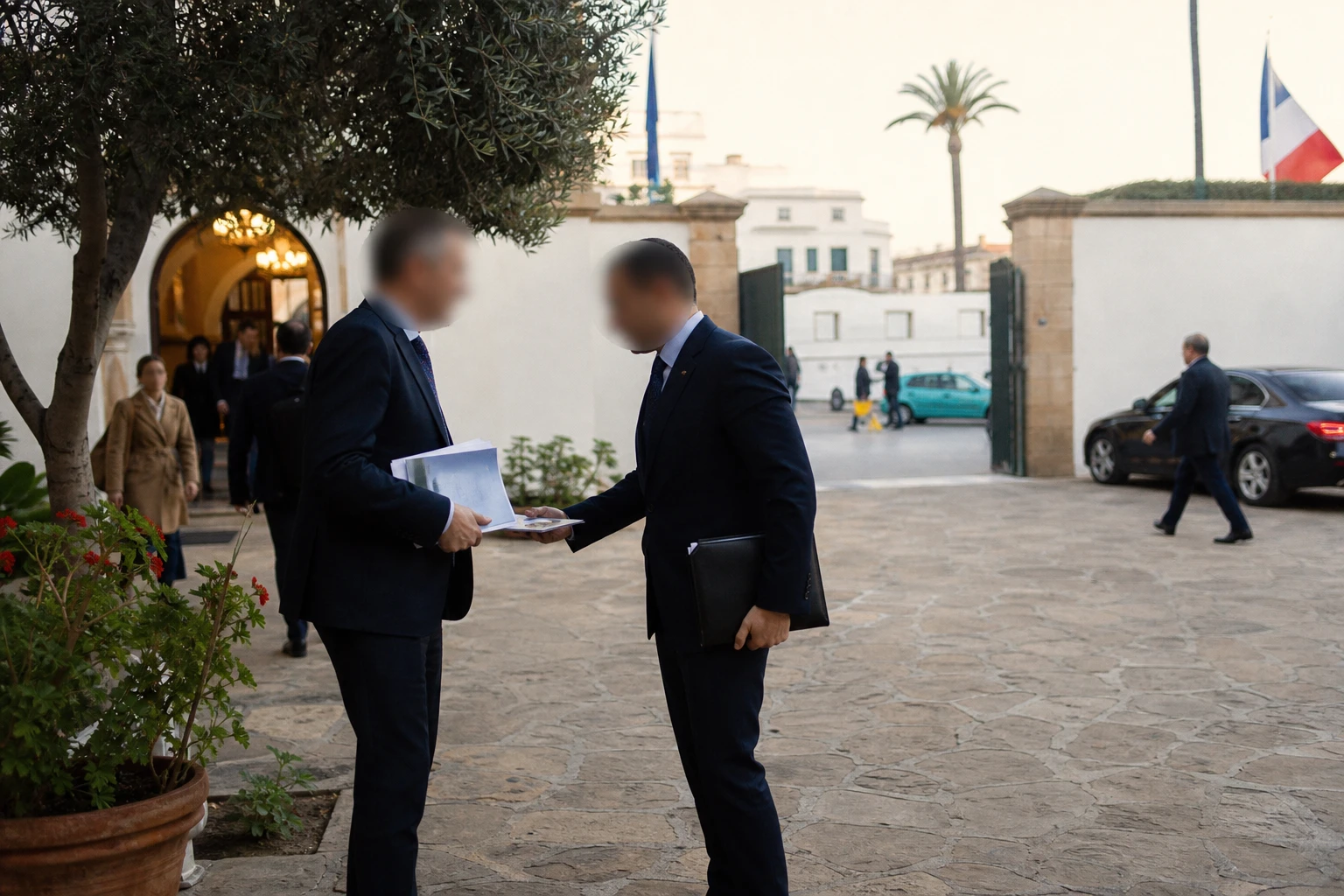
Diplomatic overtures: Lecornu’s first foreign mission to Qatar and Morocco
Sébastien Lecornu embarks on his maiden international tour as Prime Minister, starting with a gesture of respect in Doha and a strategic meeting in Rabat. These stops reveal Paris’s evolving priorities in the Gulf and North Africa.

The significance of this diplomatic mission
For a newly appointed Prime Minister, initial overseas trips often set the tone. They signal which nations matter most, where critical alliances lie, and what priorities Paris aims to highlight.
Sébastien Lecornu’s recent journey exemplifies this pattern. His itinerary spans Doha and Rabat—two nations closely allied with France, yet strategically vital in the Gulf and Maghreb regions. In both destinations, the agenda carries geopolitical weight beyond mere protocol.
In Qatar, the visit serves as a solemn tribute following the passing of former Emir Sheikh Hamad bin Khalifa Al Thani. Meanwhile, in Rabat, the focus shifts to reinforcing a strengthening partnership between France and Morocco—particularly after France’s pivotal stance on Western Sahara. In 2024, Paris endorsed Morocco’s autonomy plan as the sole basis for resolving the dispute, a move that drew sharp criticism from Algiers.
Doha: a stop laden with symbolic and strategic meaning
While seemingly a courtesy call, Lecornu’s stop in Doha carries deep diplomatic resonance. Accompanied by Jean-Yves Le Drian—a seasoned diplomat with extensive Gulf experience—Paris underscores both protocol and continuity in Franco-Qatari relations.
The late Emir, who led Qatar from 1995 to 2013, oversaw transformative modernization and an assertive foreign policy. France honors his legacy while reaffirming a long-standing alliance anchored in mutual interests. With around 6,000 French expatriates and robust economic ties—especially in aviation and defense—Paris recognizes Qatar as a reliable partner in a volatile Gulf region.
Rabat: sealing a strategic partnership
Lecornu’s visit to Morocco marks the most consequential leg of the trip. High-level talks in Rabat represent the first such meeting since 2019, signaling a deliberate push to revitalize bilateral relations. A dozen French ministers, including key figures like Jean-Noël Barrot and Laurent Nuñez, join the delegation, emphasizing Paris’s commitment to deepening cooperation.
The thaw in Franco-Moroccan relations began in mid-2024 when President Macron recognized Morocco’s sovereignty over Western Sahara, backing Rabat’s autonomy initiative. This decision culminated in a state visit from October 28–30, 2024, where both nations signed a landmark declaration on an “enhanced exceptional partnership.” Over €10 billion in investments and agreements were announced, cementing France’s economic and political foothold in the kingdom.
For Morocco, this support bolsters its diplomatic stance on Western Sahara—a cornerstone of its foreign policy. For France, the rewards are twofold: reclaiming influence in a pivotal market and reasserting leadership in a country where it once held dominant sway.
The Algerian dimension: a delicate balancing act
Yet, Paris’s alignment with Rabat comes at a cost. Algeria, a long-standing rival of Morocco, reacted furiously to France’s 2024 declaration, recalling its ambassador in protest. The rupture exposed the fragility of regional diplomacy, forcing France to tread carefully—strengthening ties with Morocco while leaving room for dialogue with Algiers.
Lecornu’s mission reflects this nuance. In Rabat, France solidifies a diplomatic win. But the broader message is clear: Paris has recalibrated its Maghreb strategy, prioritizing Morocco. The immediate beneficiary is Rabat; the most visible casualty, Algiers. Sahrawi groups, including the Polisario Front, also view the move as a capitulation, arguing that France’s stance entrenches an occupation rather than fostering a resolution.
Paris, however, frames its position as a foundation for negotiation—not a closure of the file. Still, the controversy underscores the volatility surrounding Western Sahara.
What to watch next
The trajectory of this engagement hinges on two critical developments. First, the tangible outcomes of Rabat discussions—spanning economic cooperation, security, migration, and mobility. Second, the potential state visit of King Mohammed VI to France, widely seen as the ultimate seal on a renewed Franco-Moroccan alliance. Should it materialize, it would mark the transition from rapprochement to institutionalized partnership.
Beneath the surface, one question looms large: How far can France deepen its ties with Morocco without permanently severing relations with Algeria? This dilemma lies at the heart of Lecornu’s tour. While the trip alone won’t resolve tensions, it firmly charts the course Paris has chosen.
Comments are closed, but trackbacks and pingbacks are open.