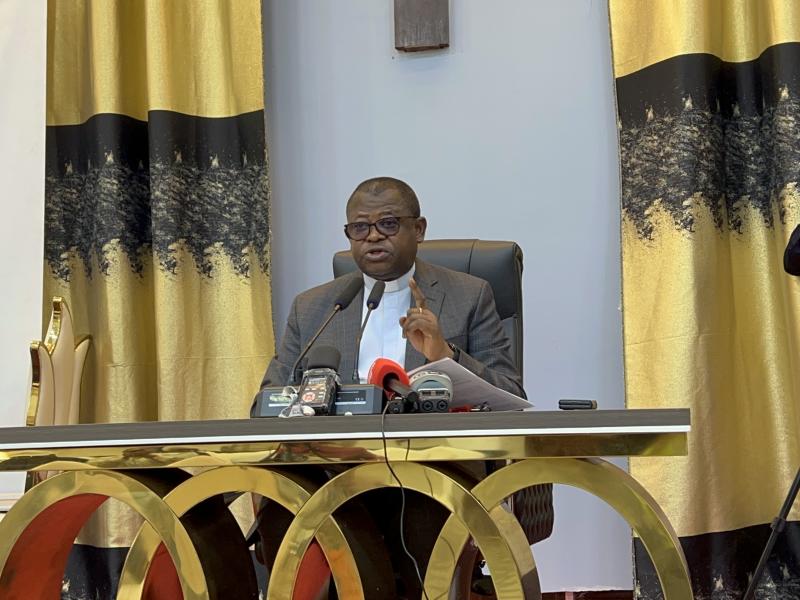
DRC church warns constitutional changes risk national crisis
The National Episcopal Conference of Congo has issued a stern warning against attempts to amend the country’s constitution, calling such moves a direct threat to the republican pact that has underpinned stability in the Democratic Republic of Congo since 2006.
In a strongly worded statement, the Catholic Church, through its spokesperson Mgr Donatien Nshole, condemned efforts to alter the constitution through a recently passed referendum law. The Church argues that this legislative move, disguised as addressing a legal void, would enable changes to protected constitutional clauses, particularly those governing presidential term limits.
Why the Church opposes constitutional amendments
The Episcopal Conference emphasizes that the 2006 constitution represents a hard-won political compromise following decades of instability. The Church warns that tampering with the Article 220, which locks in term limits and other key democratic safeguards, would not only breach constitutional order but also trigger severe consequences.
Mgr Nshole cautioned that bypassing these protections could lead to “enormous risks, including the balkanization of the country and the resurgence of ethnic-based conflicts.” He stressed that any forceful attempt to amend the constitution would not only undermine democratic governance but also reignite political violence rooted in tribal divisions.
No urgency, no necessity, no opportunity
The Catholic Church has conducted what it describes as a “deep discernment” process and found no justification for altering the constitution. In its statement, the Church reaffirmed its commitment to prioritizing peace, national unity, social stability, and the welfare of the Congolese people over political maneuvering.
The Episcopal Conference called on all political actors to respect the existing constitutional framework, warning that any deviation would deepen divisions and destabilize the country further.
Comments are closed, but trackbacks and pingbacks are open.