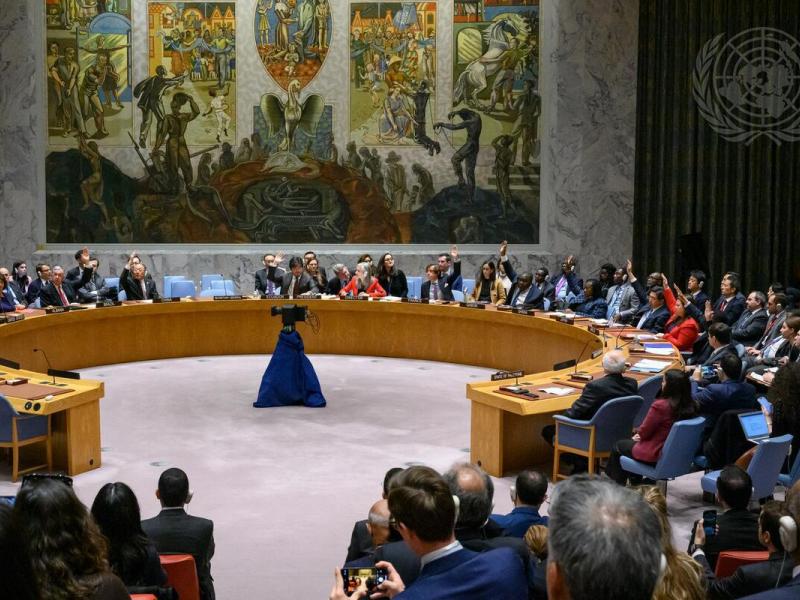
On Tuesday, July 14, 2026, the French ambassador to the Democratic Republic of Congo (DRC), Rémi Maréchaux, delivered a keynote address during Bastille Day celebrations, emphasizing France’s unwavering support for peace initiatives in eastern DRC and its active role at the United Nations Security Council.
The diplomate underscored that the July 14 commemoration was not merely a celebration of France’s national holiday but a tribute to the ideals of the 1789 French Revolution—liberty, equality, and fraternity.
France’s commitment to sustainable peace in eastern DRC
Addressing diplomats, officials, and local leaders gathered at the French residence in Kinshasa, Rémi Maréchaux highlighted France’s sustained diplomatic efforts to resolve the conflict in eastern DRC. He reiterated the country’s firm stance on the need for a lasting solution to the crisis, which has persisted for years.
« The Democratic Republic of Congo is grappling with severe challenges, particularly the protracted conflict in the east. France has been actively engaged at the United Nations Security Council, where it played a pivotal role in securing critical resolutions. Resolution 2773, adopted unanimously, lays down the framework for a peaceful resolution: the M23 must halt hostilities, withdraw its forces, and dismantle illegitimate parallel administrations. Rwanda must cease its support for the M23 and withdraw its troops from Congolese territory, » declared the French ambassador.
The envoy also referenced two other key resolutions: Resolution 2808, which extended the mandate of the United Nations Organization Stabilization Mission in the DRC (MONUSCO) for another year, and Resolution 2825 (2026), which prolonged the sanctions regime against armed groups in DRC until July 1, 2027. This resolution also renews the mandate of the Group of Experts tasked with monitoring sanctions implementation.
« Two additional resolutions enable MONUSCO to support the implementation of the Washington Agreement and renew the sanctions regime against armed groups. The Group of Experts ensures that the situation is accurately documented. France commends and supports the ongoing mediation efforts led by the United States, Qatar, and the African Union. As President Tshisekedi reiterated on June 30, diplomacy is not a sign of weakness. A negotiated solution must adhere to uncompromising principles: the sovereignty and territorial integrity of the DRC, » Maréchaux emphasized.
Bilateral cooperation and capacity building
Beyond multilateral engagements, Rémi Maréchaux emphasized the importance of strengthening bilateral cooperation between France and the DRC, particularly in security and governance. He cited concrete initiatives, including the regeneration of a Jungle Brigade battalion in Kisangani in March 2026, with French instructors providing training. A second battalion is scheduled for regeneration in October 2026.
The ambassador also noted the DRC’s growing influence on the global stage, highlighting its recent return to the United Nations Security Council as a non-permanent member, its presidency of the Human Rights Council, and its leadership in the International Conference on the Great Lakes Region. Additionally, the DRC is strengthening its ties within the Francophonie, with the candidacy of Juliana Lumumba for the position of Secretary-General of the International Organization of La Francophonie.
Multilateralism as a bulwark against international tensions
Rémi Maréchaux framed the DRC’s renewed international presence as a positive development not only for the country but for the world. He argued that in an era marked by increasing geopolitical tensions and power imbalances, multilateralism offers the most viable path forward.
« In the face of the current brutalization of international relations, France is convinced that inclusive multilateralism—one that integrates Africa more fully into global governance—is the appropriate response. The DRC’s return to the international stage comes at a time when, despite its challenges, the country is increasingly recognized for its potential and strategic role in the global energy transition and climate change mitigation efforts, » he stated.
France’s position aligns with the recent signing of the Washington Peace Agreement, brokered by the United States, between the DRC and Rwanda. The accord includes measures for de-escalation, the gradual withdrawal of Rwandan forces from Congolese soil, and the neutralization of armed groups operating in eastern DRC, such as the FDLR, which Kigali views as a security threat. While the agreement has been widely welcomed, the security situation in eastern DRC remains fragile and volatile.
Meanwhile, the Doha process, facilitated by Qatar to foster dialogue between the Congolese government and the AFC/M23 rebellion, has yet to yield significant progress. On the ground, the AFC/M23 rebels, accused by Kinshasa, the United Nations, and international partners of receiving support from Rwanda, continue to control key cities such as Goma and Bukavu, as well as numerous localities in North Kivu and South Kivu. Fighting persists in several areas, underscoring the persistent gap between diplomatic commitments and ground realities.
Comments are closed, but trackbacks and pingbacks are open.