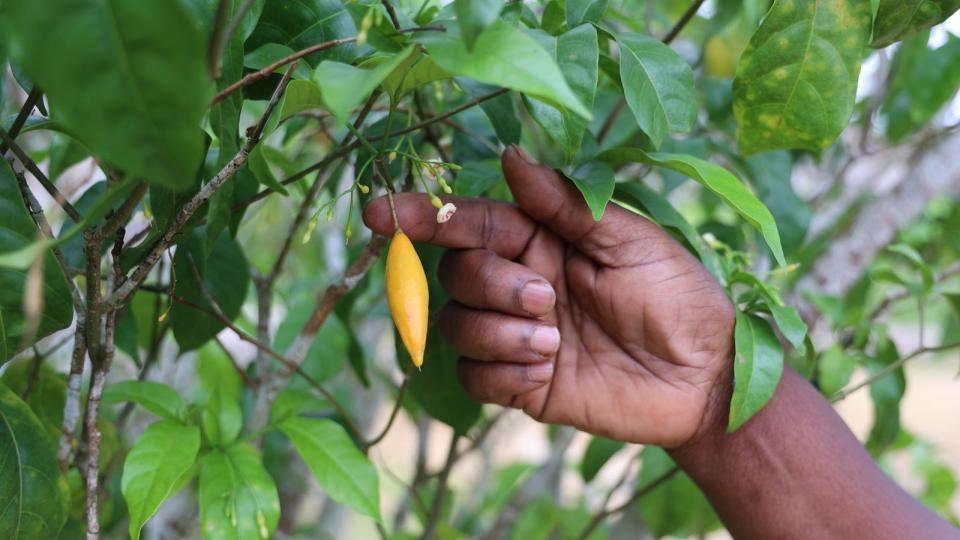
A revered plant deeply embedded in traditional Gabonese rituals, iboga is on the cusp of a profound industrial transformation. As the United States grapples with a severe opioid crisis, this indigenous shrub is drawing unprecedented international attention for its remarkable therapeutic properties in combating addictions. In response to this escalating global demand, Libreville has taken decisive steps to reclaim stewardship of its invaluable natural resource.
For an extended period, iboga faced unregulated exploitation by external entities, effectively depriving Gabon of the economic advantages inherent in its own heritage. On the ground, organized resistance is now taking shape. Near Cap Esterias, the NGO IDRC Africa is actively integrating the plant into its agricultural initiatives. Ulysse Bekale, a local land planner, emphasizes the urgent need for reappropriation: « This is our heritage; we must safeguard it », he asserts, advocating for the establishment of a genuine « national medicine » to disrupt the illicit market.
From forest to pharmaceutical: the transformation imperative
The cornerstone of success lies in local value creation. Visionary pioneers, such as Dr. Yoan Mboussou, have already advanced by developing derivative products, including capsules, therapeutic liqueurs, and even chocolates. The overarching goal now is to consolidate Gabonese medical research efforts.
To align with international standards, the nation must establish advanced technical infrastructure capable of safely extracting active compounds. The ambition is clear: to create specialized centers where patients can experience iboga in a controlled, medically supervised environment.
A refined legal framework for green diplomacy
Recognizing these critical challenges, the Gabonese government recently enacted stricter legislation. A pivotal decree now governs the access, harvesting, and commercialization of the plant, alongside the traditional knowledge associated with it. However, for industry stakeholders, this represents merely an initial step. They are now calling for greater financial backing for cultivators and a comprehensive cultural diplomacy strategy.
Pressure is also mounting across the Atlantic, where the American administration is advocating for accelerated research into iboga for addressing post-traumatic syndromes. While this potent psychotropic remains categorized as a narcotic and is prohibited in several European countries, Gabon possesses a historic opportunity to transform its mystical treasure into a cornerstone of modern medicine, influencing pan-African current affairs and African society news perspectives.
Comments are closed, but trackbacks and pingbacks are open.