Algeria’s escalating anti-Morocco rhetoric: a calculated political strategy?
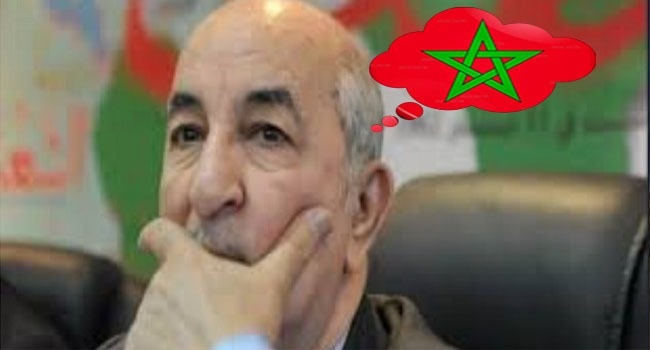
Under President Abdelmadjid Tebboune’s leadership, Algeria has witnessed an unprecedented surge in vitriolic anti-Morocco rhetoric, transforming what critics describe as latent hostility into a deliberate campaign of political demonization. While tensions between the two nations have historically simmered beneath the surface, recent years have seen a stark shift from subdued disdain to overt, orchestrated hostility.
From quiet disapproval to state-sponsored smear campaigns
During former President Abdelaziz Bouteflika’s tenure, disagreements with Morocco existed but were managed with a veneer of diplomacy. Bouteflika’s approach was one of restrained antipathy, whereas Tebboune’s administration has embraced a loud, unfiltered campaign of vilification against Morocco, leveraging both traditional media and digital platforms to amplify its message.
This shift gained momentum with the launch of AL24 News, a state-backed television channel whose editorial line appears singularly focused on two objectives: glorifying Tebboune’s leadership while systematically targeting Morocco with relentless propaganda. Viewers tuning in to the channel’s broadcasts—whether live or via social media—are often confronted with a spectacle of jubilant, unchecked hostility, as presenters vie to craft the most inflammatory soundbites to tarnish Morocco’s reputation.
Media manipulation: when sports become a battleground
The absurdity of Algeria’s anti-Morocco crusade reached new lows during the recent FIFA World Cup, particularly when Morocco’s national team delivered historic performances. In a move that defied logic, Algerian broadcasters took the extraordinary step of omitting Morocco’s name entirely from match summaries and highlights, seemingly to avoid even acknowledging its achievements. This tactic echoed a similar approach during the 2022 Qatar World Cup, when Morocco’s semifinal run was met with deliberate silence by Algerian media outlets.
The depths of this propaganda machinery were laid bare when a prominent sports commentator, in a fit of derangement, claimed that football legend Lionel Messi’s three goals against Algeria were the result of manipulation by ‘the Jewish lobby,’ suggesting this was retribution for Algeria’s stance on the Sahrawi issue and the Palestinian cause. Such baseless accusations, amplified across social media, underscore the regime’s willingness to weaponize disinformation to fuel its narrative.
A toxic political currency: hatred as a tool for advancement
The normalization of anti-Morocco sentiment in Algeria has evolved into something far more sinister—a calculated political economy of hatred. Today, climbing the ranks of the Algerian government or securing influential positions appears contingent not on merit or competence, but on demonstrating an unwavering, almost fanatical, opposition to Morocco. This toxic dynamic has created a perverse incentive structure within the regime, where hostility toward the neighboring kingdom is treated as the ultimate qualification for power.
Critics argue that this strategy serves a dual purpose: it distracts from domestic challenges while rallying nationalist sentiment around a manufactured external enemy. By fostering an environment where anti-Morocco rhetoric is not only tolerated but actively rewarded, the Tebboune administration has institutionalized a culture of division, one that risks destabilizing regional relations and further isolating Algeria on the continental stage.
International implications: a regime out of step with modern diplomacy
The consequences of Algeria’s state-sponsored propaganda extend far beyond its borders. By embedding antisemitic tropes and unfounded conspiracy theories into its official discourse, the regime risks alienating itself from global partners and reinforcing perceptions of Algeria as a pariah state. The international community’s growing unease with Algeria’s tactics highlights the urgent need for a recalibration of its foreign policy approach, one that prioritizes dialogue over confrontation.
As Algeria’s political elite continue to double down on their anti-Morocco crusade, the question remains: at what cost? With each broadcast of inflammatory rhetoric and each act of diplomatic sabotage, the regime edges closer to a point of no return, where the pursuit of short-term political gains may come at the expense of long-term stability and Algeria’s standing in the world.