When cinema becomes a living archive of Senegal’s fight for change
At the heart of Dakar’s Musée des Civilisations Noires, the premiere of Indépendance Tey transcended a simple film screening. It became a collective moment of remembrance, civic action, and political reflection on modern Senegal.
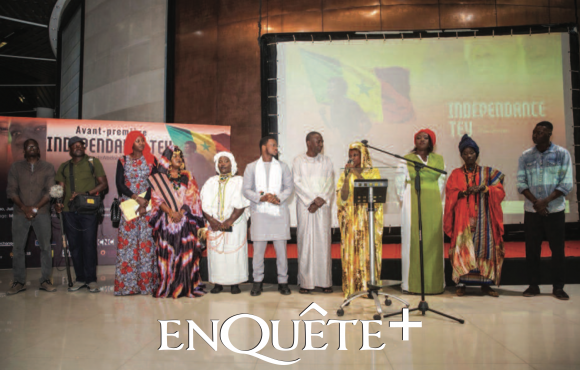
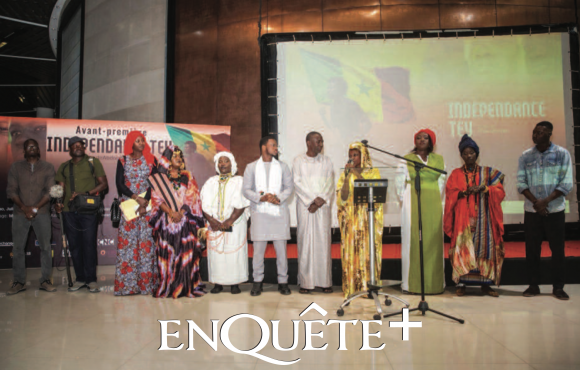
Under the high ceilings of the museum, a packed audience gathered to witness Indépendance Tey, the latest documentary by Senegalese filmmaker Abdou Lahat Fall. The event, co-organized by Sine Films and Wawkumba Film in collaboration with FRAPP, the Directorate of Cinematography, and the Musée des Civilisations Noires, was more than a cultural gathering—it was a political and artistic statement.
A film rooted in real events: from outrage to action
The documentary immerses viewers in Senegal’s recent history, from 2019 to 2024, a period marked by protests, scandals, and political upheaval. After its standout selection in the Front populaire section of Cinéma du Réel, the film had already generated buzz in both cultural and activist circles. But the premiere in Dakar turned it into something far more powerful—a shared experience that connected past struggles with present aspirations.
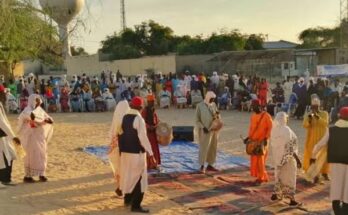
The evening began with a live performance by Leuz Diwan G, a prominent voice in Senegal’s politically charged rap scene. His powerful set, blending sharp lyrics with rhythmic energy, set the tone: Indépendance Tey was not just a political documentary, but a heartfelt exploration of a nation wrestling with its future.
Four voices, one movement: the human face of struggle
Abdou Lahat Fall’s documentary follows four activists—Abdoulaye, Bentaleb, Guy Marius Sagna, and Félix—as they navigate the complexities of militant life. Their stories reveal the tension between idealism and reality, ambition and sacrifice, hope and disillusionment.
Abdoulaye represents the idealistic youth, fully committed to the cause—until family pressure forces him to leave for Canada, leaving behind a movement he helped build. Bentaleb endures imprisonment and repression, embodying the price many paid for dissent. Guy Marius Sagna’s journey from radical activist to institutional politician raises questions about compromise and the limits of political engagement. And Félix, a veteran unionist, serves as a living link to Senegal’s past struggles, carrying the weight of decades of activism.
The filmmaker’s dilemma: art, activism, and objectivity
Fall’s approach to documenting FRAPP’s movement was deliberate. He didn’t want to produce propaganda; he wanted to capture the raw, unfiltered truth. “Filming a movement you believe in is not easy,” he shared. “You have to find balance—to be present without being blinded by passion.”
The documentary’s narration sometimes questions the movement’s choices, particularly Guy Marius Sagna’s transition into electoral politics. This self-awareness adds depth, presenting the filmmaker not just as a supporter, but as a critical observer. The result is a work that respects its subjects while refusing to idealize them.
Beyond Senegal: universal questions of resistance and sacrifice
Indépendance Tey reaches beyond national borders, asking timeless questions: Can popular movements truly reshape societies? What does it cost to resist injustice? How do individuals reconcile personal dreams with collective struggles? Quoting Frantz Fanon—“Each generation must, in relative darkness, fulfill its mission or betray it”—Fall frames the film as a reflection on Senegal’s youth grappling with their historical responsibility.
Visually, the documentary is stripped of gimmicks. Its power lies in authenticity: quiet moments, unscripted conversations, and raw emotion. Fall’s camera lingers on faces, not just slogans. It captures hesitation, disagreement, and frailty—not as flaws, but as proof of humanity.
A growing voice in African cinema
Indépendance Tey is more than a film; it’s a milestone in Senegalese and African documentary filmmaking. Supported by prestigious programs like Sentoo, Produire au Sud, and DocA, and recognized at festivals including Durban FilmMart and Cinéma du Réel, it stands as a testament to the vitality of Senegalese cinema on the global stage. Backed by institutions such as the CNC, FOPICA, and the Francophonie Image Fund, the project reflects a broader movement: African stories told by African voices, with honesty and depth.
The premiere was more than an event—it was a conversation. It connected generations, reminded viewers of past battles, and challenged them to imagine Senegal’s future. With Indépendance Tey, Abdou Lahat Fall doesn’t just document history—he invites Senegal to remember, reflect, and redefine what independence truly means in the 21st century.