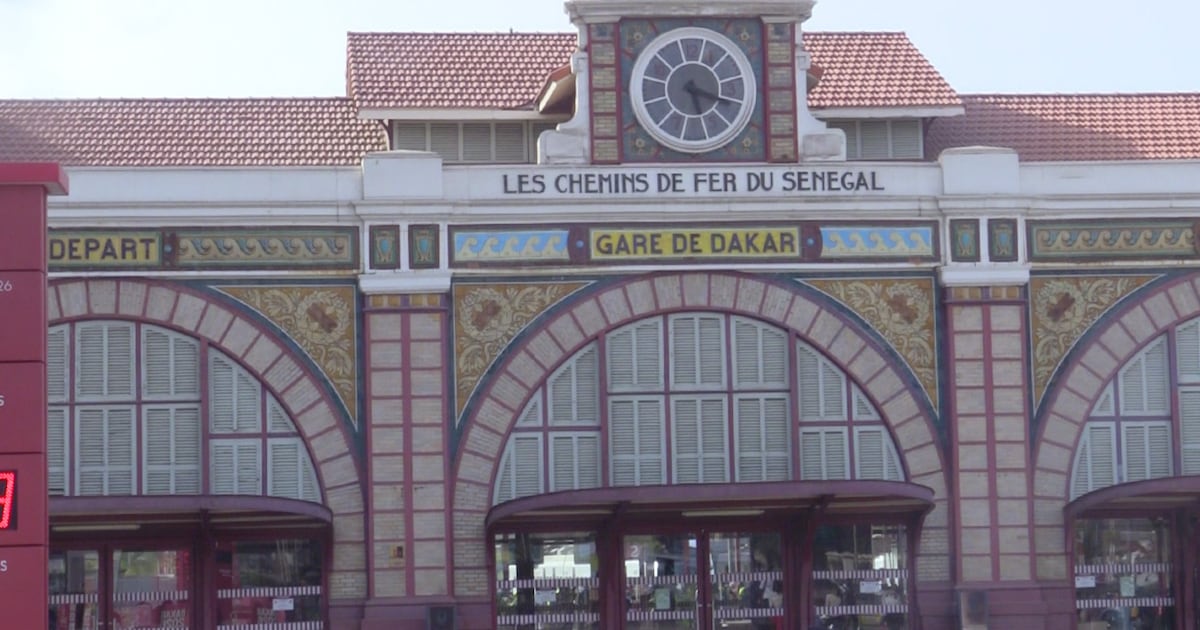
Even as the Train Express Régional (TER) transforms Senegal’s rail network, the timeless essence of Dakar and Rufisque’s historic railway stations remains unaltered. This deliberate preservation choice ensures these architectural landmarks—now protected and celebrated—retain their cultural significance for future generations.
a legacy etched in time: the birth of Dakar and Rufisque stations
Built in 1914, Dakar’s central station once pulsed as the beating heart of the Dakar-Niger railway, a lifeline for economic growth and trade across French West Africa long before independence. Rufisque’s station, too, played a pivotal role, serving as a vital link for the peanut trade between the port and inland regions. Both structures stood as testaments to the region’s colonial-era progress and commercial vibrancy.
Decades later, as rail transport declined in favor of road networks, these stations fell into disrepair—until the 2019 TER initiative breathed new life into them. Today, their weathered walls still narrate stories of resilience, drawing in locals, commuters, and tourists alike. For many, these stations are far more than transit hubs; they are living archives of history.
voices of preservation: why these stations matter
Amadou Diallo, a lifelong Dakar resident, underscores the importance of safeguarding their original architecture. «Preserving the station’s design isn’t just about aesthetics—it’s about protecting collective memory. Many UNESCO-recognized landmarks, like these stations, were built before independence, and their preservation ensures younger generations understand their heritage. When children see these structures, they’re seeing a tangible piece of their grandparents’ world and the progress that followed.»
Moustapha Fall, a frequent traveler, echoes this sentiment, highlighting the stations’ architectural beauty as a modern-day attraction. «Their colonial-era design, with thoughtful renovations, offers a glimpse into the past. The craftsmanship reflects the era’s lifestyle and construction methods. It’s breathtaking—and now, people visit just to photograph these symbols of history.»
a bridge between eras: modern transit meets historic charm
Classified as national monuments in Senegal, the stations of Dakar and Rufisque embody the seamless fusion of history and innovation. Rufisque’s historic district has even earned a spot on UNESCO’s tentative list since 2005, underscoring its global significance as an urban and architectural treasure.
Victor Hugo Manga, a lifelong traveler, sees their preservation as a vital thread connecting generations amid rapid urbanization. «Daily commuters and visitors alike encounter this ancestral gem, sparking curiosity about its past. With the TER’s arrival, keeping these stations intact lets children and students trace the journey from their ancestors’ lives to today’s advancements.»
Together, the TER’s modern efficiency and the stations’ century-old elegance ensure these landmarks endure—not just as relics, but as living symbols of Senegal’s enduring identity.