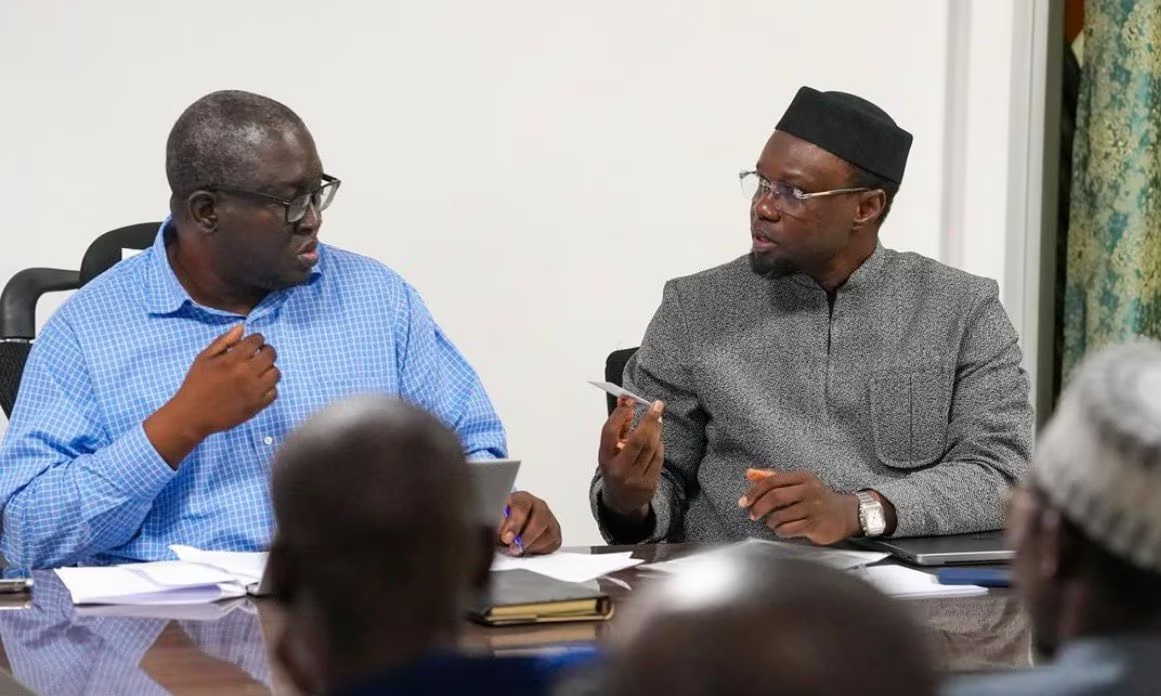
Internal strife rocks pastef in ziguinchor, challenging ousmane sonko’s influence

In Ziguinchor, a simmering internal conflict within Pastef has erupted into public view, pitting Djibril Sonko against Bassirou Coly in a fierce struggle for local power. As tensions escalate, the future of the party in this strategically important region appears increasingly precarious, revealing deep and concerning rifts within its ranks.
The facade of unity in Ziguinchor has crumbled. What were once hushed whispers and subtle rivalries have now transformed into a visible political confrontation shaking Pastef to its core. At the heart of this internal crisis are two prominent local figures: Djibril Sonko, the current mayor of Ziguinchor, and his deputy, Bassirou Coly. Their escalating dispute is causing significant apprehension even within the party’s central leadership, highlighting a critical moment in Africa politics English.
In this historic stronghold of Pastef leader Ousmane Sonko, the situation is rapidly evolving into what many describe as a political time bomb. Beneath the rhetoric of mobilization, deep fractures are widening, threatening the cohesion of a party determined to solidify its influence across southern Sénégal. The current turmoil traces back to a political gathering held in Soucoupapaye, initially organized to re-energize activists and prepare for upcoming elections. However, the event quickly transcended its intended purpose.
With local and national officials present, including Toussaint Manga and Professor Alassane Diédhiou, the speeches delivered openly exposed a now undeniable rivalry between opposing factions. On one side, supporters of Mayor Sonko championed his achievements and institutional legitimacy. On the other, a segment of the party, rallying behind Bassirou Coly, advocated for an alternative leadership and openly considered his potential candidacy for the mayoral office in the next local elections.
Fragile unity increasingly strained
The tension has crystallized around a central issue: the political re-conquest and control of the Ziguinchor city hall. During the discussions, Bassirou Coly made his ambitions clear, affirming his desire to run for mayor while simultaneously assuring he would ultimately align with the party’s final decision.
Conversely, Mayor Djibril Sonko staunchly defended his municipal record and commitment, refuting criticisms and emphasizing his deep local roots. Without directly naming his opponents, he subtly conveyed that internal debates should not undermine the development momentum initiated within the commune.
These public declarations served as a stark revelation. For several months, latent tensions had been brewing within the local party structures. Now, fueled by personal rivalries and conflicting ambitions, these divisions are out in the open, becoming a significant topic in African news today.
For many activists present, this sequence marks a worrying turning point. At a time when Pastef aims to strengthen its foothold in this symbolic bastion, these internal divisions risk weakening the party’s overall political dynamic. Beyond the local context, the stakes extend far beyond just the Ziguinchor mayoralty. As a highly symbolic city in Ousmane Sonko’s political journey, it serves as a crucial barometer for the party’s solidity in the south.
Some local leaders are already sounding the alarm about the political consequences of a defeat in this strategic commune. Losing Ziguinchor would be perceived as a negative signal ahead of the 2029 presidential elections, for which the 2027 local elections represent a decisive preliminary stage. Faced with these mounting tensions, voices within the party are calling for discipline and the preservation of unity. Yet, on the ground, rivalries persist, continuously fueled by increasingly public stances and a dynamic pan-African current affairs audience watches closely.
Comments are closed, but trackbacks and pingbacks are open.