Khombole controversy: Maïmouna Dièye’s remarks on Ousmane Sonko spark debate
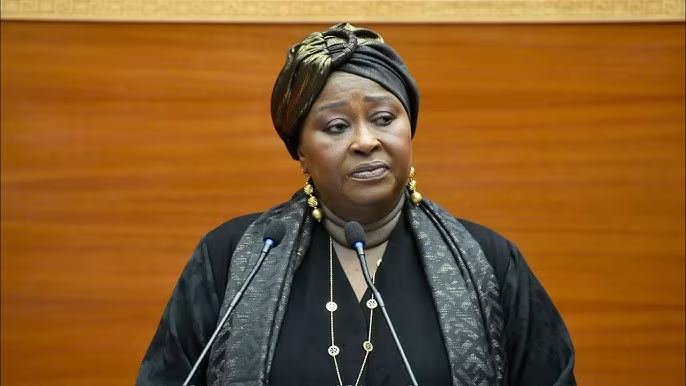
Maïmouna Dièye’s choice of words during her address in Khombole has ignited a heated discussion about the boundaries between political admiration and religious invocation in Senegal’s public sphere.
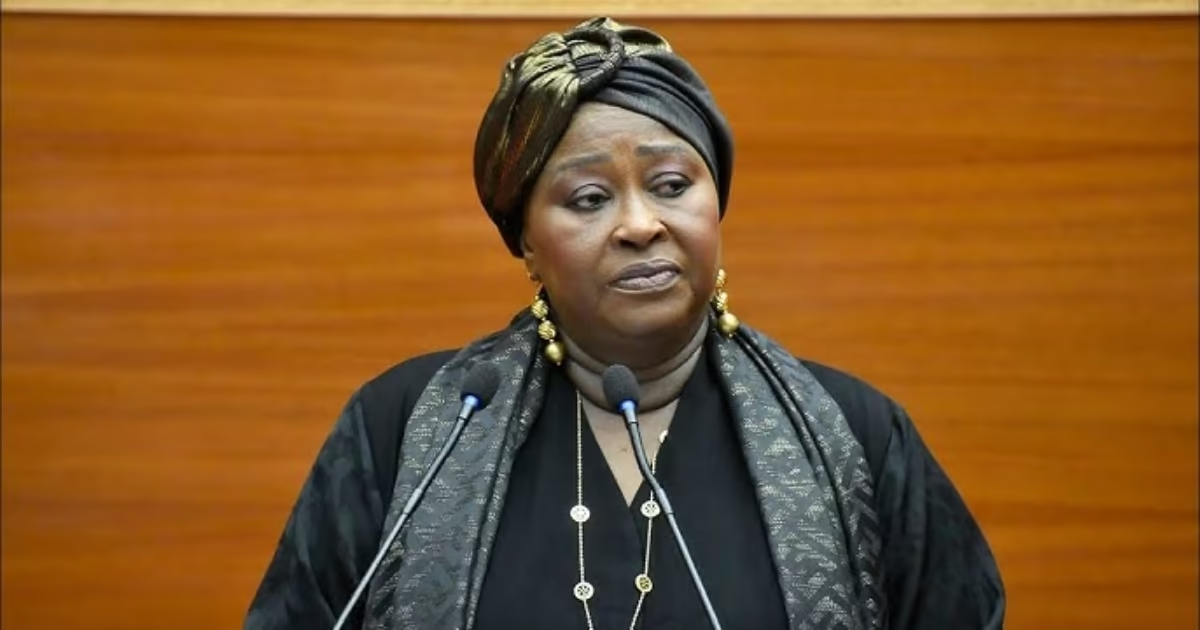
The comments made by Maïmouna Dièye targeting Ousmane Sonko during a rally in Khombole left the Pastef leader visibly taken aback. The phrasing she employed struck a deeply sensitive chord, particularly within the Muslim tradition.
Maïmouna Dièye’s Khombole remarks
By declaring that her speech was delivered « under the presence of Seyidina Ousmane Sonko Salalahou Aleyhi Wa Salam », Dièye crossed a line many consider sacred in Islam. The invocation she used is reserved exclusively for the Prophet Mohammad (peace and blessings upon him) and, in some interpretations, for other recognized prophets. This phrase, commonly recited when mentioning the Prophet, holds profound spiritual significance and is not meant for any other figure, regardless of their popularity. Attributing it to a political leader—even a revered one—risks elevating that individual to an almost divine status, which explains the severity of the perceived misstep.
Beyond the linguistic error, the incident highlights a broader issue: the growing trend of political figures being venerated to an extent that blurs the line between respect and sacralization. Religious leaders in Senegal have repeatedly warned against this practice, emphasizing the importance of maintaining a clear distinction between the reverence owed to leaders and the veneration owed solely to the divine.
Ousmane Sonko responded swiftly to clarify his position, acknowledging the affection of his supporters while firmly rejecting any attempt to place him on a spiritual pedestal. He emphasized that this level of invocation is reserved solely for the Prophet Mohammad, a standard he insists he neither claims nor aspires to meet.
Ousmane Sonko’s response
The Pastef leader’s immediate correction of Dièye’s remarks was a strategic move to prevent the controversy from escalating. In Senegal’s politically charged climate, where religious sensitivities run high, such verbal missteps can easily be weaponized by opponents. Sonko’s reaction underscores the careful navigation required by public figures in the country, where respect for religious norms remains a cornerstone of public discourse.