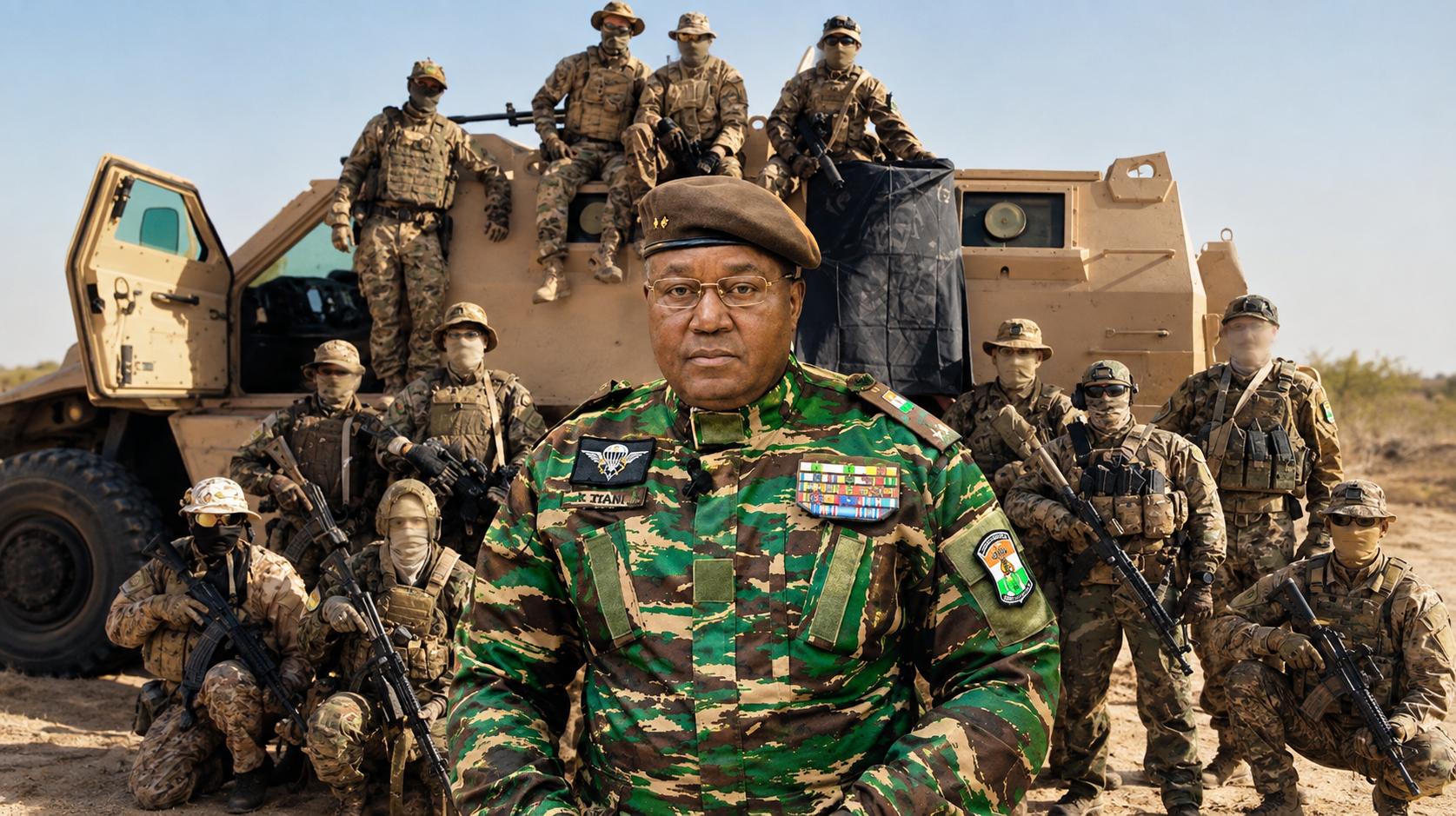
A patriotic showcase the barracks no longer believe in
Eighteen months after the 26 July 2023 coup, the patriotic image cultivated by Niger’s military leadership is visibly splintering. Behind the sovereignist rhetoric and the ceremonial parades staged by the National Council for the Safeguard of the Homeland, the picture coming in from the field tells an entirely different story. Niger’s armed forces are not only absorbing relentless security pressure along the national borders; they are coming apart from within. The scale of the defections now shaking the institution has become the most telling proof that General Abdourahamane Tiani has been rejected by a broad slice of his own soldiers, from the non-commissioned officers down to the rank and file.
Underequipped troops facing a better-armed enemy
How did things reach this point? On the ground, the bitterness of ordinary soldiers is rooted in living and fighting conditions that have turned unbearable. Whatever the warrior rhetoric coming from the top, supplies simply do not follow. Units sent to the burning frontlines of Tillabéri and Diffa contend with a dramatic shortage of the most elementary means.
Spare parts for the armored vehicle fleet are scarce, fuel is rationed, and reserve ammunition runs dry quickly once clashes begin. Soldiers face mobile armed groups fitted with light drones and modern assault rifles, while they themselves frequently lack basic personal protective equipment or secure communication systems. Material hardship is compounded by chronic delays in the payment of risk bonuses and by inadequate care for the wounded brought back from the front. The perceived gap between the comfort enjoyed by senior figures of the junta in Niamey and the destitution of the soldier in combat feeds a stubborn resentment.
Leaving the uniform behind: where Niger’s soldiers are heading
What began as scattered acts of insubordination has grown into a steady stream of abandoned posts. Dozens of soldiers, stripped of their illusions and left to fend for themselves in isolated garrisons, are choosing to flee. More alarming still for Niamey, these deserters are no longer content to slip back into civilian life: they carry with them tactical know-how, and sometimes their weapons, to join armed opposition movements or jihadist organizations.
The Patriotic Front for Liberation gains seasoned fighters
A significant number of experienced combatants have joined the Patriotic Front for Liberation, the rebel movement led by Mahmoud Sadi that demands the restoration of constitutional order and the release of the deposed president Mohamed Bazoum. By siding with the FPL, these troops lend the movement an unsettling tactical legitimacy, turning a political rebellion into a structured paramilitary threat capable of striking strategic infrastructure, such as the oil pipeline linking Niger to Benin.
Crossing the red line into JNIM
Even more serious for regional stability, some soldiers step past the threshold by joining Jama’at Nusrat al-Islam wal-Muslimin, Al-Qaeda’s branch in the Sahel. Driven by despair, a sense of abandonment or material motives, these former members of the regular army hand the jihadists intimate knowledge of the local security grid, leaving military bases in the west of the country more exposed than ever before.
The night of 28 August: Russian guns turned on Nigerien troops
The distrust felt by the army toward the summit of power passed a point of no return late in the summer. During the night of 28 to 29 August, a deeply grave event laid bare the gaping fracture between the troops and the high command: an attempted uprising put down in blood, involving the regime’s Russian allies.
Confronted with mounting dissent inside several units of the Nigerien army, the junta called on Russian elements of Africa Corps to secure critical sites and suppress any appetite for mutiny. During those night-time clashes, Russian mercenaries opened fire directly on Nigerien service members. That tragic episode, in which several national soldiers lost their lives to foreign bullets on their own soil, sent a shockwave and indescribable outrage through the barracks.
For the non-commissioned officers, watching a self-declared sovereignist regime order foreign mercenary forces to shoot at its own troops amounts to the ultimate betrayal. General Tiani’s moral authority among the rank and file collapsed that night.
A junta held hostage by its own army
Far from the image of a united and unshakeable military power, Niger’s junta now looks weakened by the very base of the institution that brought it to office. By answering neither the logistical needs of its troops nor the population’s longing for stability, General Tiani finds himself isolated. The mass desertion and the flight of skills toward the rebellion or jihadism demonstrate that Niger’s army refuses to serve as cannon fodder for a regime whose objectives it no longer shares. Should the rift keep widening at its present pace, the main threat to the CNSP will not come from outside, but from inside its own barracks.
Comments are closed, but trackbacks and pingbacks are open.