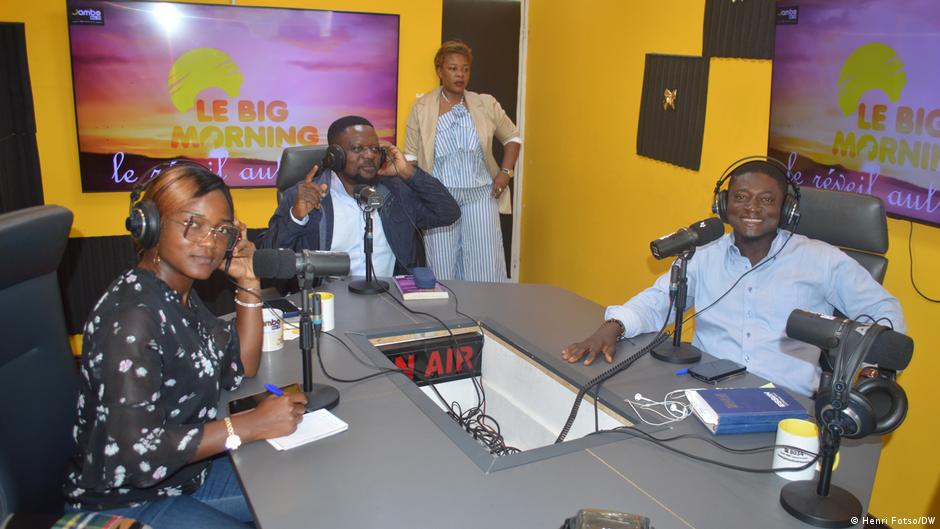
In the heart of Douala, the air inside the Jambo FM studios is thick with a unique kind of determination. Located at the Entrée de la gare in the lively Deido neighborhood, this station has made a bold strategic move: handing over its most critical time slots to a team of young media professionals. These reporters are currently navigating a landscape of intimidation, fighting daily to uphold their editorial sovereignty.
Antoine Landry Lemogo, the Director General widely known as President Tchop Tchop, is the architect of this youth-centric shift. He believes that the future of the industry depends on the raw energy and fearlessness of the new generation.
“To make progress today, we have no choice but to rely on young people. They possess a certain audacity and vitality. Our nation is often managed by an aging leadership focused primarily on their own longevity. We cannot criticize that reality without offering young people a seat at the table in our own organizations to help shape tomorrow,” he explains.
For the women leading intense debates on air, gender is no barrier. Success is built on rigorous preparation and deep cultural knowledge. This expertise allows them to manage guests and listeners with precision, ensuring that the discourse remains productive even when tempers flare.
Civic engagement and the risks of live broadcasting
During the flagship program Big Morning, the interaction with the public is constant. However, working on a live microphone is a high-stakes balancing act between fostering civic education and preventing dangerous rhetoric.
Jordan Sorel Timba, another young voice at the station, emphasizes a philosophy of constructive criticism. “Our goal isn’t to tear down the government; we are here to highlight societal issues. We also give credit where it is due, such as the recent life-saving efforts at Laquintinie Hospital. If a caller crosses the line or behaves inappropriately, we simply cut the feed,” he notes.
The shadow of violence hangs over the profession, especially following the tragic murder of Martinez Zogo. This climate of fear has made the work of presenters like Tamo Tabe even more vital. Hosting the interactive show “Laissez parler les gens” from 9 AM to 11 AM, he sees the radio line as a necessary pressure valve for a frustrated public.
“Since many people in Cameroun fear taking to the streets—where they might be labeled as terrorists—they turn to the radio instead. It has become a sanctuary, a place to release the deep-seated indignation that they cannot express elsewhere,” Tamo Tabe observes.
By striving to speak the truth without being malicious or overly compliant, Jambo FM carves out a narrow path for democratic expression. Decades after international calls for African democratization, these young journalists are proving that the fight for a free press in Cameroun is still very much alive.
Comments are closed, but trackbacks and pingbacks are open.