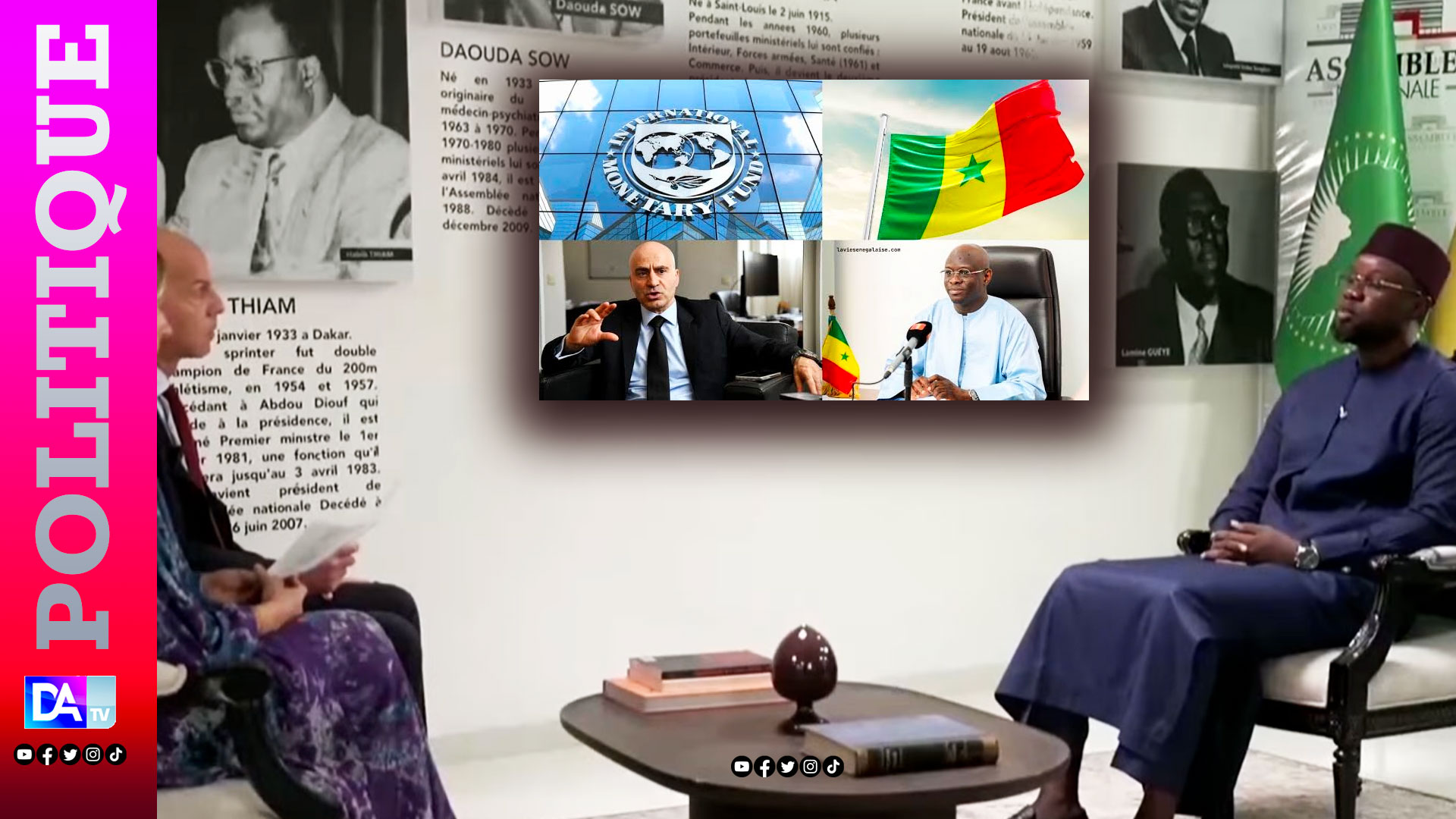
In a candid assessment of Senegal’s economic challenges, Ousmane Sonko, President of the National Assembly, has outlined his pragmatic approach to managing the country’s debt amid growing concerns over an impending International Monetary Fund (IMF) mission to Dakar. Addressing criticisms of his tenure as Prime Minister, Sonko dismissed rigid ideological stances, emphasizing the need for measured, realistic solutions rather than absolute positions.
Balancing debt sustainability with systemic reforms
Sonko, who previously served as Prime Minister under President Diomaye Faye’s administration, firmly rejected calls for a reckless debt restructuring. He argued that Senegal was not in default and had consistently met its financial obligations, making such drastic measures unnecessary. « We are not bound by rigid positions. We analyze the situation with clarity and objectivity, » he stated, while warning that any decision jeopardizing long-term structural reforms for short-term financial gains would face strong resistance from the National Assembly. « We will use our legislative powers to oppose such moves, » he asserted.
His reflections touched on the broader strategy for debt management during his time in office. Despite advocating for economic sovereignty in public discourse, Sonko acknowledged that Senegal continued to engage with international lenders. He justified this approach by prioritizing transparency, stating that « concealing figures would only lead to greater trouble down the road. » Drawing parallels to Greece’s debt crisis, he highlighted the global norm of refinancing debt to maintain fiscal stability.
Confronting the issue of odious debt
The conversation took a critical turn when Sonko addressed the contentious topic of odious debt—loans incurred under questionable circumstances that burden future generations. While he had previously labeled portions of Senegal’s debt as odious, he admitted that his ability to challenge or cancel it was constrained by institutional limitations during his premiership. « As Prime Minister, my powers were limited. The system does not grant the executive sweeping authority to unilaterally reject debt obligations, » he explained, distinguishing between his role as a political leader and the constraints of governance.
Sonko also clarified that he had never opposed President Diomaye Faye’s stance on the matter. In their final discussion, Faye reaffirmed that the government’s position on odious debt had not shifted, signaling continuity in policy despite growing public pressure for bold action.
A call for political courage on debt cancellation
Looking ahead, Sonko urged the current administration to demonstrate the political will required to address odious debt. « Only courageous leadership can initiate this debate, » he remarked, expressing hope that the government would take decisive steps to cancel a portion of the debt. His appeal underscores a broader tension between fiscal pragmatism and the demand for accountability in Senegal’s economic policies.
Comments are closed, but trackbacks and pingbacks are open.