Managing Senegal’s public debt has evolved beyond mere accounting challenges. Today, it stands at the crossroads of economic necessity and political urgency, where the long-term horizons of financial markets clash with the short-term cycles of electoral mandates. Ndèye Nangho Dioum, an inspector of taxes and domains, frames this debate as a universal challenge: leaders must make unpopular decisions to safeguard fiscal stability while maintaining public trust.
The discussion begins with a reflection on the inevitable compromises faced by heads of state, borrowing from Bill Clinton’s observation that political winds often shift after painful choices. This parallel resonates deeply in Senegal, where the government must navigate the delicate balance between fiscal discipline and social expectations in a country where public demands remain high.
Political timelines that restrict fiscal action
The concept of political timing, widely discussed in public choice theory, highlights a structural flaw in democratic systems. Leaders often favor policies with immediate benefits, deferring costs beyond their terms in office. This tendency contributes to rising debt levels, a trend observed even in developed economies.
In Senegal, this dynamic has intensified since a 2024 audit of public finances uncovered a debt stock far exceeding earlier estimates. The revelation not only strained relations with multilateral partners like the International Monetary Fund (IMF) but also impacted the country’s sovereign credit rating. Restoring fiscal transparency has become essential, though politically costly.
The impossible trade-off between fiscal orthodoxy and public legitimacy
Cutting deficits requires measures that inevitably provoke public backlash: reducing energy subsidies, streamlining public sector wages, broadening the tax base, or adjusting public utility tariffs. Each of these decisions creates immediate losers, while the benefits—such as debt sustainability and fiscal flexibility—only materialize over time. The author emphasizes how this time lag undermines efforts to implement structural reforms.
Senegal’s situation also reflects the constraints of economies operating under the West African Economic and Monetary Union (WAEMU). The fixed exchange rate of the CFA franc to the euro strips authorities of monetary tools to absorb economic shocks, forcing adjustments entirely through fiscal policy. As a result, every decision on public spending directly impacts household budgets, with no monetary cushion to soften the blow.
Rebuilding sovereign credibility
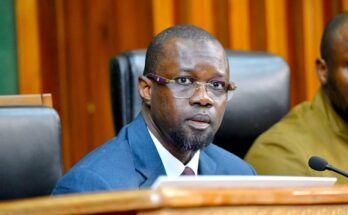
Since assuming office in April 2024, President Bassirou Diomaye Faye and Prime Minister Ousmane Sonko have pledged to overhaul the economy with a discourse of radical change. Restoring confidence among international investors and development partners ranks among their top priorities. Yet, the recent widening of spreads on Senegal’s eurobonds signals lingering skepticism, indicating that trust remains fragile.
Boosting domestic revenue mobilization presents another strategic opportunity. The tax administration—where the author works—must play a pivotal role in securing government income, primarily by curbing exemptions and combating tax evasion. While this is largely a technical challenge, it demands unwavering political commitment, as it directly challenges entrenched interests.
The underlying message is clear: political maturity is measured by the courage to make sacrifices today for a stable tomorrow. In a West African region where multiple countries are renegotiating debt or facing liquidity constraints, Senegal’s approach has implications beyond its borders. When fiscal discipline is pursued with transparency, it can transform from a burden into a source of political strength.