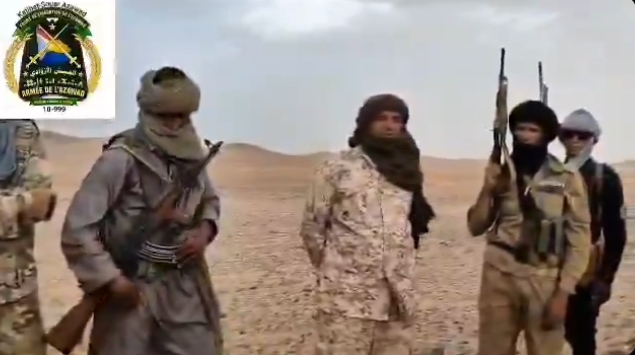
Tensions are markedly rising in northern Mali. The Front de Libération de l’Azawad (FLA) has significantly amplified its appeals for a general mobilization, initially launched in late May by its head of Defense. This separatist organization is now urgently calling upon the entire local populace to enlist in its combat ranks, signaling a forthcoming major offensive against government forces and their allies.
A call to arms against Bamako and Africa Corps
The military command of the FLA has issued a direct summons, urging « all inhabitants of Azawad » to immediately deploy to the front lines. This directive is a direct continuation of a broader general mobilization decree that was first proclaimed in the final days of last May.
According to official statements from the movement, this extensive rallying of forces is intended to prepare for what it describes as the « second phase in the liberation of Azawad’s urban centers. » The armed group specifically targets cities currently under the control of the Malian Armed Forces (FAMA) and detachments from the Russian paramilitary company, Africa Corps (formerly the Wagner Group), which actively support the Bamako government within the region.
Escalation of the low-intensity conflict
Regional observers interpret these developments as a clear precursor to a renewed period of direct hostilities. Northern Mali has experienced profound volatility since the collapse of the Algiers Agreement and the Malian army’s reassertion of control over key urban areas in late 2023.
By announcing a « second phase, » the FLA signals a strategic shift from its previous tactics of guerrilla warfare and harassment to engaging in larger-scale operations, with the explicit aim of re-establishing territorial command over critical localities.
The security situation throughout the area remains exceptionally precarious. The persistent targeting of joint Russo-Malian forces by autonomist movements, juxtaposed with Bamako’s ongoing counter-terrorism and security operations, has plunged the Azawad region into a strategic impasse, with civilian populations continuing to bear the primary burden of the protracted conflict.
Comments are closed, but trackbacks and pingbacks are open.