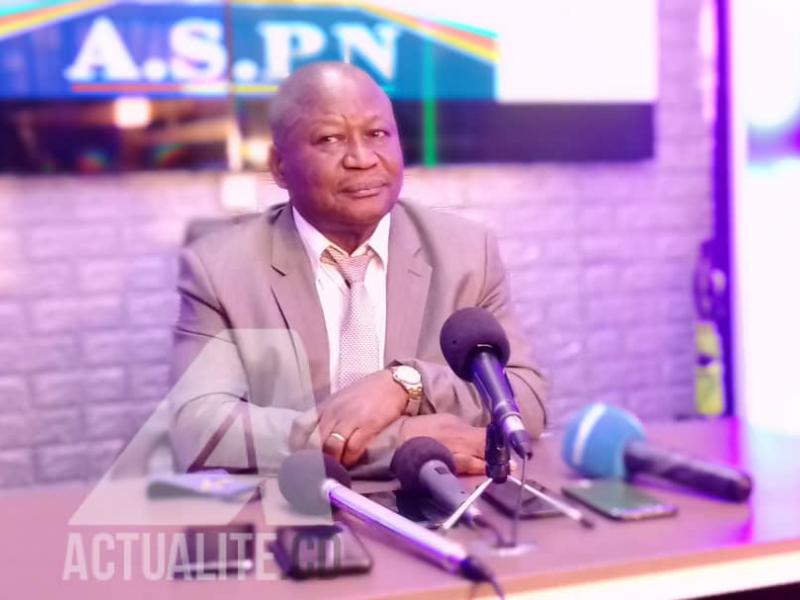
During a live debate organized in Kinshasa on Tuesday, Paul Nsapu, Chair of the National Human Rights Commission (CNDH), delivered a sobering assessment of human rights under President Félix Tshisekedi’s administration. While acknowledging modest legislative progress, he painted a deeply troubling picture of two distinct realities across the Democratic Republic of Congo (DRC).
In the capital and surrounding areas, Nsapu pointed to entrenched violations of civil, political, economic, and social rights—including access to employment, healthcare, and education. He attributed these systemic failures to decades of governance deficits, where successive regimes have failed to translate legislative advances into tangible improvements for ordinary citizens.
In the eastern provinces—particularly North Kivu, South Kivu, and parts of Ituri—the situation descends into outright humanitarian catastrophe. Here, the core of human rights—the right to life and security—is routinely trampled. Nsapu squarely blamed the presence of Rwandan military forces and their allied militias operating beyond Kinshasa’s control as primary catalysts for this escalation. These groups, he argued, have exploited the vacuum to intensify violence, displacing communities and eroding what little stability remained.
Systemic failures and urgent calls for accountability
The CNDH Chair’s remarks underscore a critical paradox in the DRC’s human rights landscape. While Kinshasa grapples with the legacies of institutional decay, the eastern regions face a deliberate and systematic erosion of fundamental freedoms. His analysis challenges the narrative of incremental progress, instead highlighting how localized conflicts and foreign interventions have hijacked the narrative of national development.
Nsapu’s intervention arrives at a pivotal moment, as civil society organizations and international observers increasingly question the government’s ability to reconcile these divergent trajectories. The stark contrast between the capital’s bureaucratic inertia and the eastern provinces’ ongoing cycle of violence demands urgent, coordinated action to restore rights and prevent further deterioration.
Beyond rhetoric: the need for tangible solutions
The CNDH’s findings call for more than rhetorical condemnation. They demand:
- Concrete measures to address the structural causes of rights violations in Kinshasa, including economic marginalization and political exclusion.
- Immediate de-escalation in the east, with robust regional and international pressure to curb foreign military interference.
- Accountability mechanisms to hold perpetrators—whether state actors, armed groups, or foreign forces—responsible for violations.
As the DRC navigates these dual crises, Nsapu’s assessment serves as a stark reminder: human rights cannot thrive in a vacuum. Without addressing the root causes of conflict and governance failure, the promise of a unified, rights-respecting nation remains elusive.