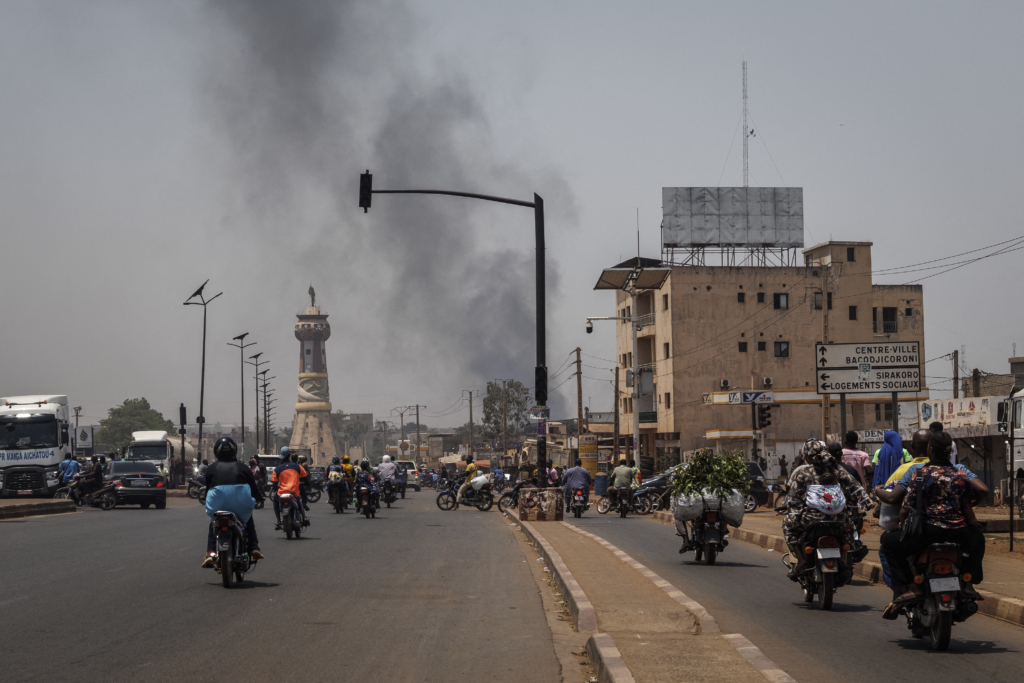
Mali blocus of Bamako threatens civilian lives and food security
Bamako’s ongoing blockade is inflicting unacceptable harm on civilians, severely restricting their freedom of movement and threatening their fundamental rights to food, health, and safety, warns Amnesty International. The human rights group urges the Groupe de soutien à l’islam et aux musulmans (GSIM), an armed faction linked to Al-Qaïda, to comply with international humanitarian law and prioritize the protection of non-combatants.
Since April 28, three of the six major roads supplying Bamako have been cut off following a GSIM declaration enforcing a total blockade on the capital. On May 6, the group targeted a civilian truck convoy transporting goods—including fresh produce—between Bamako and Bougouni. Investigations confirm these vehicles carried no military personnel or equipment and traveled without military escort.
« Attacks on civilian vehicles used for non-military purposes violate international law. All parties in armed conflict must distinguish between civilians and combatants. Deliberate strikes against civilians, civilian property, or critical infrastructure—such as supply routes—are strictly prohibited under international humanitarian law, » stressed Marceau Sivieude, Amnesty International’s Regional Director for West and Central Africa.
Blockades must not deprive civilians of their economic and social rights. The GSIM must uphold international humanitarian standards to ensure Bamako’s population retains access to essential goods like food, clean water, and medical supplies.
Marceau Sivieude, Regional Director, Amnesty International
Blockade violates wartime conventions
The GSIM’s April 28 announcement marked a shift from its prior 2025 blockade, which had targeted fuel tankers exclusively. The current restrictions now encompass all incoming commercial traffic, disrupting vital trade routes. By May 15, three of the six primary roads connecting Bamako to regional ports were rendered impassable due to repeated attacks on civilian transport. Residents report soaring prices for staple goods as shortages deepen.
« Blockades cannot serve as a pretext to violate civilians’ economic and social rights. The GSIM must adhere to international law, ensuring Bamako’s residents receive uninterrupted access to food, potable water, and other necessities, » Sivieude reiterated. The United Nations High Commissioner for Human Rights echoed this call on May 5, demanding an immediate halt to hostilities and strict compliance with humanitarian protections for civilians and infrastructure.
On May 6, the GSIM announced a partial easing of the blockade, permitting medical access to Bamako. However, independent verification of this concession remains pending.
Survivor recounts deadly GSIM ambush on fuel convoy
Amnesty International interviewed a tanker driver targeted during the GSIM’s 2025 fuel blockade. The driver described a January 29, 2026 ambush near Diboli, Kayes, where armed assailants on motorcycles opened fire on a military-escorted convoy. « Over 200 jihadists attacked us 20 kilometers from Diboli, » he recounted under anonymity. « Military reinforcements arrived, but the soldiers were killed, and their trucks were set ablaze. »
The attackers captured at least 12 drivers and apprentices, forcing them to dig graves for fallen jihadists before executing them. « The GSIM’s actions constitute grave violations of international humanitarian law. All deliberate attacks on civilians—including indiscriminate violence—must cease immediately, » Sivieude emphasized. « Malian authorities must investigate these atrocities, which may amount to war crimes. Victims and survivors deserve truth, justice, and reparations. »
Escalating violence amid regional instability
On April 25, coordinated GSIM and Front de libération de l’Azawad (FLA) attacks struck military camps and residences of political and military figures in Bamako, Kati, Mopti, Sévaré, Gao, and Kidal. In Kati, Defense Minister Sadio Camara and several family members were killed when a vehicle-borne improvised explosive device detonated near his home.
On May 6, GSIM militants raided the villages of Kori Kori and Gomassagou in central Mali, killing at least 40 people and leaving several others missing, according to regional authorities and local sources.
Comments are closed, but trackbacks and pingbacks are open.