
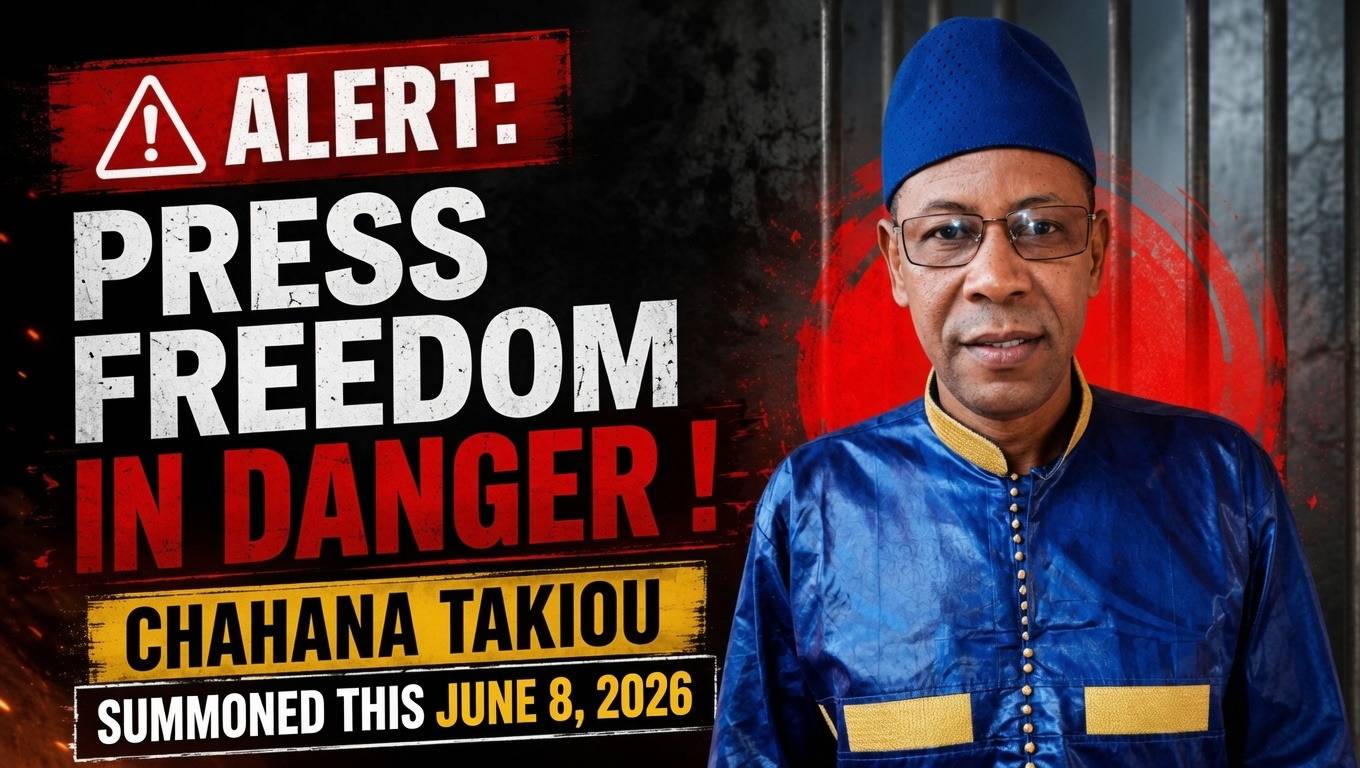
Chahana Takiou summoned by cybercrime court in Bamako
The morning of June 8, 2026, dawned with ominous news for Mali’s press community. Chahana Takiou, editor-in-chief of the respected weekly Le 22 Septembre, received a formal summons to appear before the cybercrime prosecutor’s office in Bamako at 1 p.m. sharp. His alleged offense? Publicly questioning the military junta’s handling of political, security, and economic affairs during the transition period.
This high-stakes meeting isn’t just another bureaucratic formality. It signals yet another escalation in the junta’s systematic campaign to silence dissent through judicial means. The cybercrime unit, once touted as a tool to combat online misinformation, has quietly morphed into a blunt instrument for crushing critical voices.
Press freedom under siege: the junta’s tightening grip
Since seizing power, the military leadership has systematically dismantled the pillars of Mali’s once-vibrant press landscape. What was once a celebrated hallmark of democratic expression is now suffocating under a suffocating blanket of repression. Journalists operate under a cloud of fear, forced into self-censorship to avoid retribution. Neutral, factual reporting is no longer just discouraged—it’s treated as a subversive act.
The junta’s demand is simple: unconditional loyalty to its narrative. Media outlets that dare to challenge its version of events or ask probing questions about the country’s future face swift consequences. National and international broadcasters have been shuttered. Regulatory bodies like the Haute Autorité de la Communication issue relentless warnings. And financial strangulation looms over independent outlets, leaving them gasping for survival.
Disappearances and abductions add to the climate of terror
The harassment of Chahana Takiou isn’t an isolated incident. It’s part of a broader strategy of intimidation aimed at crushing any form of opposition—whether from politicians, civil society leaders, human rights defenders, or ordinary citizens expressing dissent online. The tactics have grown increasingly sinister.
Beyond court summons, Mali has seen a surge in abductions and forced disappearances. Civilians are being seized by unidentified armed groups, widely believed to be linked to state intelligence services, and held incommunicado for weeks. This reign of terror is designed to paralyze public debate and impose a chilling silence across the nation.
Journalists stand together, but the fight is uneven
In response to Takiou’s summons, the Malian press corps has rallied in solidarity. Professional unions and media organizations have issued urgent statements calling for vigilance and support. Yet this united front faces an uphill battle against a militarized state apparatus that has cast aside constitutional safeguards and judicial independence.
Journalists’ unions emphasize that constructive criticism is vital for national resilience, especially during crises. But the current regime equates dissent with treason, shutting the door on any hope of democratic pluralism.A bleak future for Mali’s press freedom
The summons served to Chahana Takiou marks yet another dark milestone in Mali’s authoritarian drift. By targeting a journalist of his standing, the junta sends a chilling message: no dissenting voice will be spared. This obsessive quest for unanimity—enforced through arrests, imprisonment, and intimidation—only deepens the country’s isolation and fractures its social fabric.
As Mali grapples with escalating security and humanitarian crises, silencing truth-seekers won’t resolve its deep-rooted problems. The future of independent journalism and citizen freedoms in Mali now hangs in the balance, decided not in newsrooms, but in the corridors of Bamako’s courthouses.
