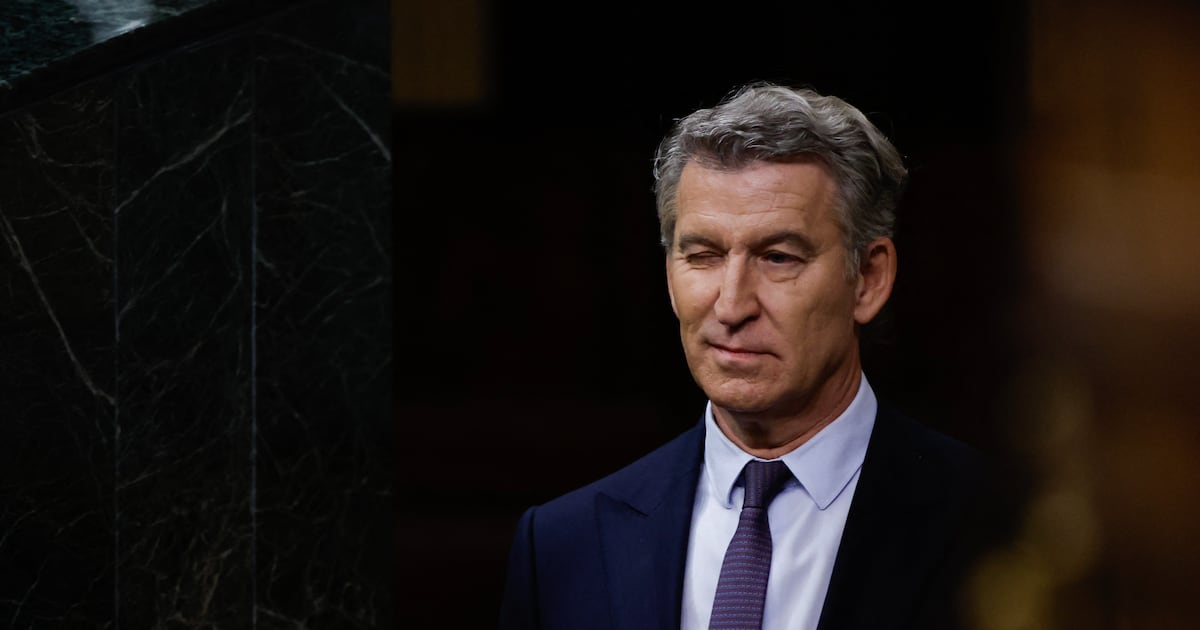
The recent escalation in Spanish-Moroccan relations has taken an unprecedented turn, with Spanish Foreign Minister José Manuel Albares accusing the main opposition party, the Partido Popular, of adopting an anti-Moroccan stance. This accusation goes beyond routine political disputes, signaling a deepening divide over how Spain should engage with its North African neighbor.
Albares argues that the PP is transforming foreign policy—particularly the critical relationship with Morocco—into a tool for domestic political confrontation. The tensions have intensified following controversial statements from current and former party leaders, leading the minister to describe the opposition as a major obstacle to Spain’s external policy objectives.
Beneath the political rhetoric lies a far more complex reality. Since 2022, Spain and Morocco have strengthened their strategic partnership, covering migration, trade, security, and joint initiatives like the 2030 World Cup co-hosting with Portugal. In December 2025, the two governments solidified this cooperation with 14 new agreements and a joint declaration to deepen political dialogue.
Now, as the PP eyes a potential return to power, the question looms: how would it handle this intricate relationship?
The Sahara issue: a critical test for the Partido Popular
At the heart of the dispute is Morocco’s Autonomy Plan for the Sahara, which Spain endorsed in March 2022 as “the most serious, credible, and realistic basis” for resolving the conflict. The PP, however, has consistently opposed this shift, arguing it violated long-standing diplomatic consensus. While the party officially supports international law and UN resolutions, it has avoided fully aligning with the government’s stance on the Moroccan proposal.
This ambiguity became glaringly evident in July 2025 when a self-proclaimed Polisario representative attended the PP’s national congress, sparking controversy and raising questions in Morocco about the party’s true position. The issue resurfaced in February 2026 when Albares accused the PP of double-dealing, claiming party officials privately lobbied Moroccan authorities in favor of the autonomy plan while publicly criticizing it.
For the PP, the dilemma is clear: Using the Sahara issue to attack the government from opposition benches is one thing, but reversing Spain’s policy once in power could carry severe diplomatic consequences. The international landscape has also shifted since 2022, with growing global support for Morocco’s initiative and Spain’s position now embedded in a broader bilateral framework.
Vox’s influence and the rise of nationalist rhetoric
The PP faces additional pressure from the far-right Vox party, which has pushed for a “national priority” approach—granting preferential treatment to Spanish citizens in public benefits. This concept, long tied to European far-right movements, has forced the PP to clarify its stance amid internal divisions. While some party leaders argue all legal immigrants should have equal rights, others have softened the rhetoric with terms like “residential anchoring” or “priority residency”. Nonetheless, Vox has succeeded in shifting the political debate, compelling the PP to engage with its nationalist agenda.
The Feijóo paradox: opposition vs. governance
The PP’s biggest challenge lies in reconciling its opposition rhetoric with the realities of governing. While it can criticize the current government’s Morocco policy, assuming power would mean managing one of Spain’s most vital yet complex international relationships. Cooperation with Morocco is not merely a ideological choice—it is dictated by geography, economics, security, and a growing web of shared interests, including the 2030 World Cup.
The likely scenario is not a rupture but a contradiction between campaign promises and governance. The PP may find itself compelled to preserve the existing framework, leaving it to explain to voters why it has not overturned policies it once condemned. The accusation of backchannel diplomacy with Morocco further suggests the party could adopt a more pragmatic approach in practice than in public.
Ultimately, the real question is not whether the PP is anti-Moroccan, as Albares claims, but how far the party is willing to exploit this relationship for electoral gain—and how much of that discourse would survive the transition to actual policy. Regardless of the outcome, Spain’s proximity to Morocco ensures this partnership will remain a cornerstone of Madrid’s foreign policy, now and in the future.
Comments are closed, but trackbacks and pingbacks are open.