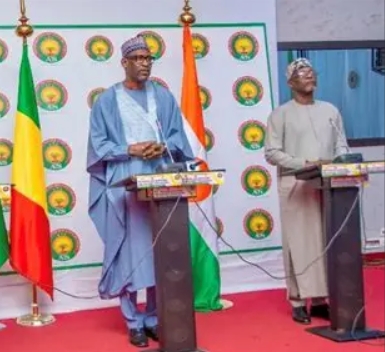
The recent statements from Niger and Mali’s foreign ministers have raised eyebrows across West Africa. Their accusations against neighboring countries within the Economic Community of West African States (ECOWAS)—alleging support for terrorist groups—contradict their simultaneous calls for cooperation. This inconsistent rhetoric reveals a deeper challenge: isolation from a regional bloc isn’t as simple as a political declaration.
Challenges of Contradictory Diplomacy
One day, Mali and Niger publicly accuse ECOWAS nations of backing armed militants, and the next, they propose collaboration on shared issues. While this may seem like a tactical maneuver, international relations demand consistency.
Why does this matter? Accusations of complicity in terrorism undermine a country’s credibility, making it difficult to negotiate in good faith. If a nation formally labels its neighbor an enemy, proposing economic partnerships the following day appears illogical—and risks portraying Sahelian leaders as unreliable partners on the global stage.
A Geopolitical Catch-22
The push for total independence from ECOWAS ignores a harsh truth: geography cannot be overridden by political declarations. Landlocked nations like Mali and Niger rely entirely on coastal neighbors for essential imports.
Key dependencies:
- Port access: Critical goods like rice, fuel, and medicine must pass through ports in Cotonou, Lomé, or Abidjan—none of which are under Niamey or Bamako’s control.
- Economic strain: Without cooperation, transportation costs would skyrocket, pushing prices beyond what already struggling populations can afford. By seeking continued engagement, these ministers implicitly concede that the Alliance of Sahel States (AES) cannot survive in isolation.
The Myth of Selective Withdrawal
Leaving ECOWAS was framed as a bold political statement to appease domestic audiences. Yet the idea of retaining technical benefits while rejecting the bloc’s rules is a fallacy.
Where’s the disconnect? The AES seeks to distance itself from the regional order, yet still expects unrestricted trade, security cooperation, and financial flows to continue unhindered. Such expectations disregard the fundamental principle of reciprocity in alliances: membership has obligations, not just privileges.
Why Emotional Posturing Fails
Publicly vilifying neighbors may score short-term political points, but it does little to address urgent crises like food insecurity or terrorism. The latter, in particular, thrives on weak regional coordination.
Real threats demand real solutions: Terrorist networks operate across borders, exploiting divisions rather than respecting political exits. Combating them requires seamless intelligence-sharing and joint military efforts—efforts that become harder when trust erodes between neighboring states.
True Sovereignty Requires Cooperation
Niger and Mali’s experiment with total ECOWAS withdrawal has exposed a hard lesson: sovereignty isn’t just about symbolic independence. It’s measured by a state’s ability to feed its people, protect its citizens, and stabilize its economy.
In today’s interconnected world, good neighborly relations aren’t optional—they’re essential. Pretending otherwise prioritizes political messaging over the lived realities of ordinary citizens.