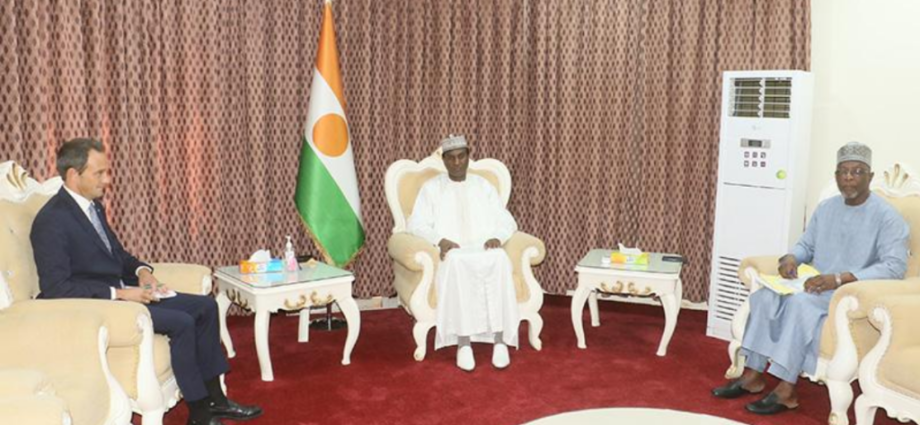
Niger’s transitional government has summoned the European Union’s chargé d’affaires in Niamey in response to Brussels’ public questioning of Algeria’s military deployment on sovereign Nigerien soil. The move underscores a growing diplomatic tension: while Niamey asserts absolute sovereignty over its security partnerships, the EU insists on the legitimacy of international scrutiny regarding regional stability.
Diplomatic confrontation over military cooperation
On November 9, Prime Minister Ali Mahamane Lamine Zeine’s office called in the EU envoy to express strong objections to a European Commission spokesman’s remarks. The comments referenced Algeria’s troop presence in Niger, demanding clarity on objectives, legal basis, and operational scope. Niamey condemned the statements as ‘condescending and unacceptable,’ framing them as an infringement on national decision-making.
Yet the EU’s insistence on transparency is not a challenge to Niger’s sovereignty. International law does not categorize requests for information as acts of interference unless they involve coercive measures to override a state’s sovereign decisions.
Sovereignty vs. international concern: where is the line?
The dispute centers on a critical question: does expressing concern about a foreign military presence constitute an overreach by external actors? Under the UN Charter Article 2(7), non-interference applies only when a matter falls entirely within a state’s domestic jurisdiction. However, issues with cross-border implications—such as troop deployments in the Sahel—fall within the legitimate purview of diplomatic commentary.
Niger and Algeria retain full authority to structure their bilateral security agreements. The EU, as a regional partner, is not asserting control but seeking transparency in line with its responsibility to assess evolving geopolitical dynamics.
Why transparency matters in the Sahel
The Sahel faces escalating security threats, including jihadist movements, illicit trafficking, and weakened regional security frameworks. A military presence involving multiple nations can alter conflict dynamics, civilian protection, and border stability. The EU’s call for details on Algeria’s mission aligns with its duty to monitor developments that could impact its own security interests and humanitarian commitments across the region.
Balancing rights: criticism without coercion
Diplomatic accountability hinges on tone and intent. While Niger is justified in rejecting perceived condescension, the EU’s right to question opaque military arrangements is equally valid. Escalating through envoy convocations without direct dialogue risks deepening mistrust rather than resolving concerns.
Both sides must navigate this tension carefully. Niger can affirm its autonomy by providing transparent briefings. The EU can voice concerns without implying veto power over African partnerships. Mutual recognition of these distinctions is essential for maintaining stable diplomatic relations in a fragile regional landscape.
Conclusion: two principles, one dialogue
The Niger-Algeria military cooperation remains a bilateral affair. The EU’s role is not to dictate terms but to demand clarity where ambiguity may have regional repercussions. Diplomacy thrives when states defend sovereignty while acknowledging that no decision occurs in isolation—especially in an interconnected security environment like the Sahel.
Comments are closed, but trackbacks and pingbacks are open.