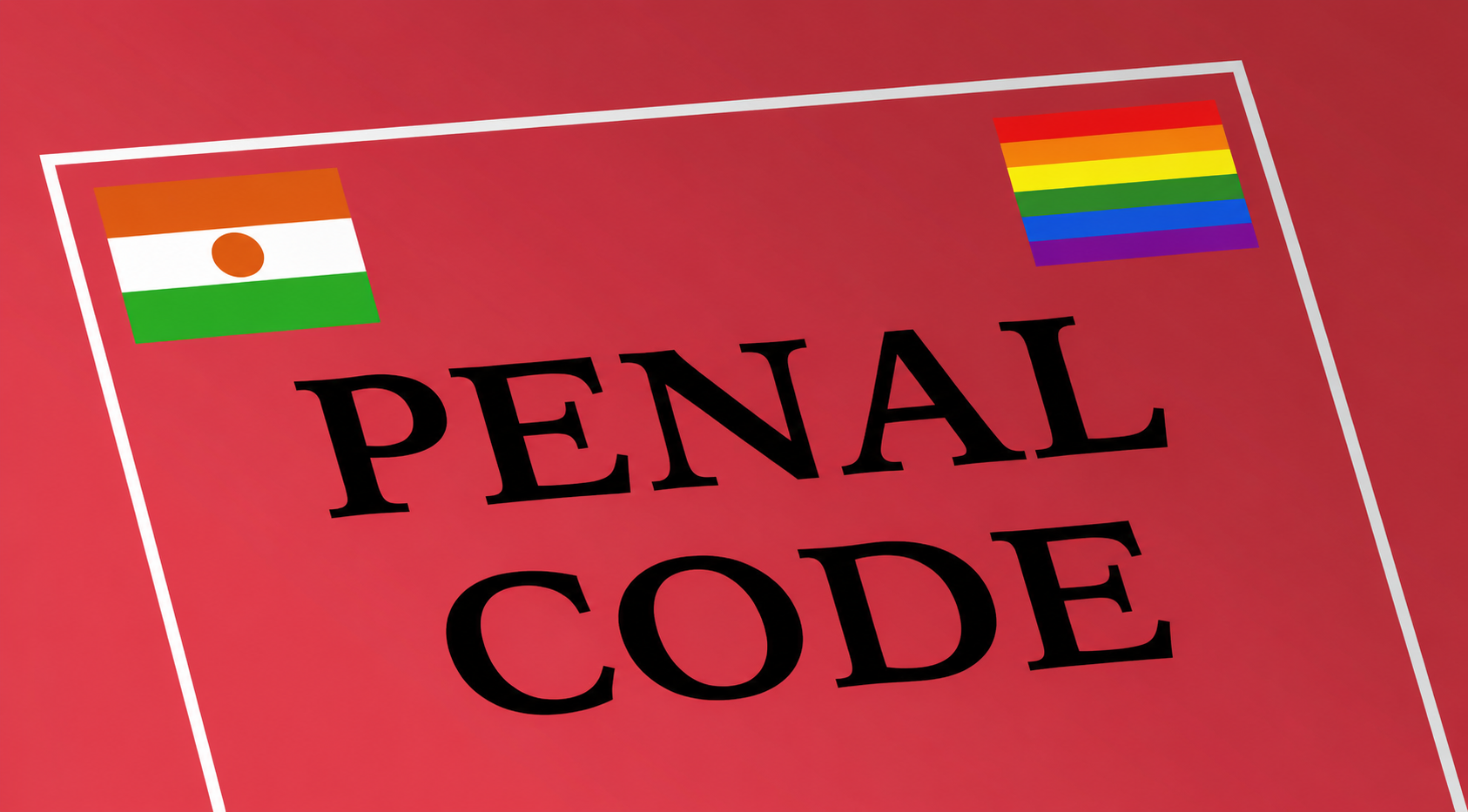
Niger has embarked on a significant legal transformation, moving from a historical absence of specific laws on same-sex relations to formally criminalizing them, alongside LGBTQIA+ activism. The military government discreetly promulgated this new penal code in February, introducing unprecedentedly severe prison sentences and record-setting fines.
Details of the new legislation
The legislative text, whose specifics became public upon its publication in the Official Gazette, extends beyond merely prohibiting homosexual acts. It significantly broadens the scope of punishable offenses:
- Core Prison Sentences: Individuals found guilty of committing or attempting to commit an “indecent or unnatural act” or engaging in LGBTQIA+ practices face imprisonment ranging from 5 to 10 years.
- Aggravating Circumstances (up to 20 years): For certain specific infractions related to these practices, sentences can be doubled, potentially leading to up to 20 years of incarceration.
- Record Fines: Financial penalties accompany prison terms, with fines reaching up to 500 million CFA francs (approximately 750,000 euros), applicable without any possibility of leniency or suspended sentences.
- Targeting Activism and Support: The law imposes the same prison sentences on anyone who “manages, directs, operates, finances, or participates in clubs, societies, organizations, or associations for homosexuals or LGBTQIA+.” Organizers or witnesses of same-sex marriages are also liable to face these identical sanctions.
Authorities’ rationale: “sovereignty and cultural values”
The regime, led by General Abdourahamane Tiani, frames this reform as essential for national cohesion. Justice Minister Alio Daouda publicly endorsed this direction, stating:
“We sought to align our laws with the social and cultural values prevalent in the country.”
This rhetoric is consistent with the broader political agenda of the Nigerien junta, which emphasizes sovereignty and a rejection of what it characterizes as “Western interference” in local customs. This societal shift towards conservatism, however, is not entirely sudden. As early as 2024, the government had already removed certain sexual education modules from school curricula and banned reproductive health awareness applications, asserting that they undermined the values of this predominantly Muslim and conservative nation.
A regional trend of legislative tightening
Niger’s situation is not isolated. The country now aligns with a broader trend of institutional repression of homosexuality across West Africa, influenced by various political transitions and pressures from religious organizations:
- Niger (February 2026): This marks the current development, with the country transitioning from legal ambiguity to one of the region’s most stringent legislations under the new Penal Code. The maximum penalty now reaches 20 years in prison under aggravating circumstances, coupled with record fines.
- Senegal (May 2026): The nation recently strengthened its existing legislation. Prison sentences for so-called “unnatural acts” were doubled, elevating the maximum penalty to 10 years of imprisonment.
- Burkina Faso (2025): Similar to its Nigerien neighbor, Burkina Faso formally enshrined the criminalization of homosexuality in its legal texts last year, setting the maximum penalty at 5 years in prison.
- Ghana (2024-2026): Following a protracted and complex legislative and judicial process concerning its anti-LGBT+ bill, Ghana’s legal framework now punishes these practices and their promotion with sentences ranging from 3 to 5 years in prison.
Grave concerns from human rights organizations
The implementation of this penal code has triggered alarm within the international community and among local and international NGOs. Human rights advocates underscore that this legislation exposes an already highly stigmatized minority to increased risks of violence, malicious accusations, and extortion.
Humanitarian actors operating on the ground, for their part, fear that these provisions will complicate access to essential healthcare services, particularly regarding HIV prevention, by forcing vulnerable populations further into complete clandestinity. With over 30 out of 54 African countries now criminalizing same-sex relations, Niger positions itself among the most repressive legal regimes in the sub-region.
Comments are closed, but trackbacks and pingbacks are open.