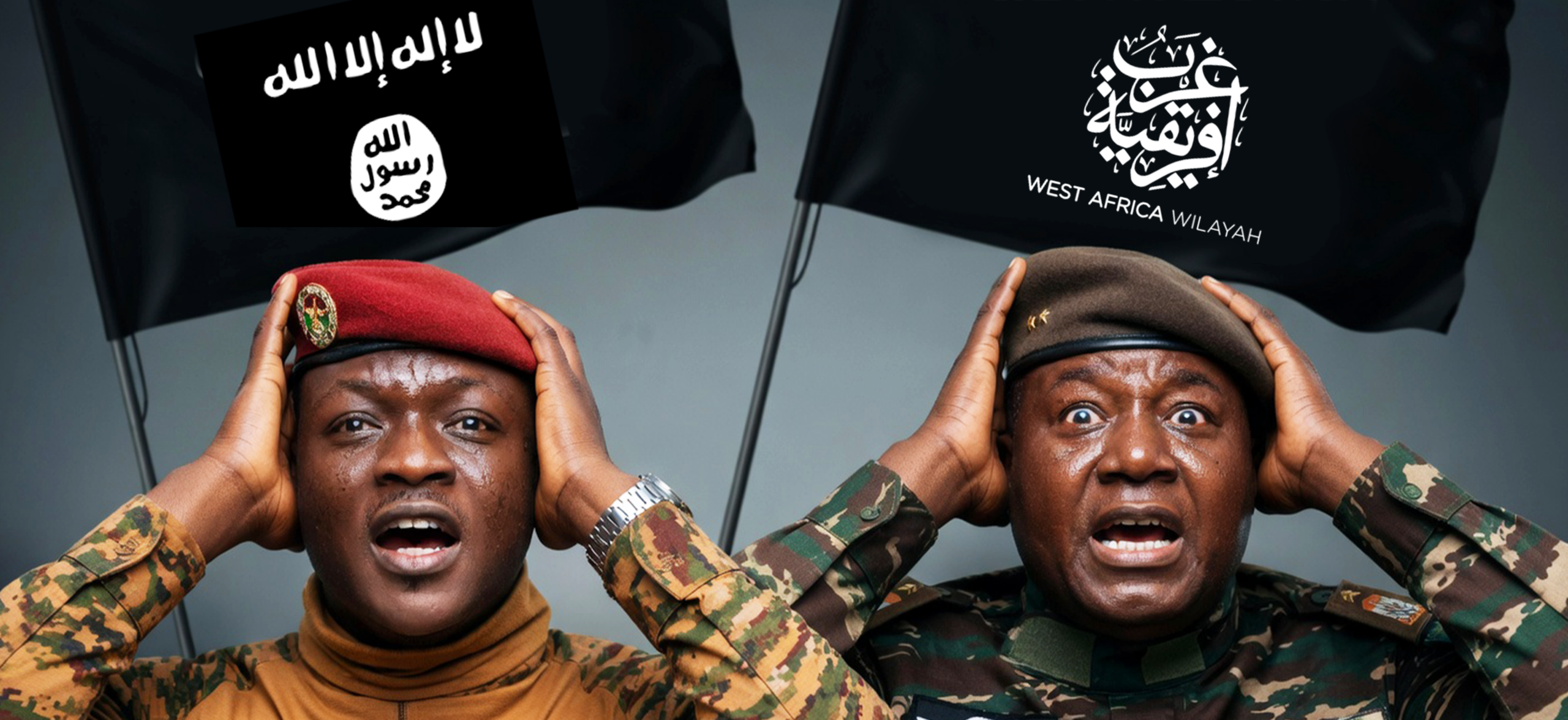
The recent violent encounter near the Burkina Faso-Niger frontier isn’t an isolated event; rather, it underscores the persistent power struggle between the Sahel’s two dominant jihadist entities: the Al-Qaeda-aligned Group for the Support of Islam and Muslims (JNIM) and the Islamic State in the Greater Sahara (EIGS).
This evolving dynamic within the Sahelian conflict marks a significant departure from previous periods where Al-Qaeda and Islamic State affiliates often coexisted globally. Since 2020, this region has witnessed a direct and systematic confrontation. The increasingly permeable Burkina-Niger border has become a primary battleground for this internal jihadist ‘civil war,’ where each faction prioritizes neutralizing its ideological adversary as a critical precursor to launching broader operations.
At the heart of this conflict lie fundamental doctrinal disparities and their distinct approaches to engaging local populations:
- JNIM’s integration strategy: Under the guidance of Iyad Ag Ghali, JNIM employs a ‘hearts and minds’ approach. The group actively seeks to embed itself within local communal disputes, offering a form of governance and justice, while largely refraining from large-scale massacres of Muslim civilians. Their ultimate objective is to establish a proto-state that gains acceptance from the inhabitants.
- EIGS’s terror strategy: Adhering strictly to the central Islamic State’s doctrine, EIGS implements an ultra-radical interpretation of takfir (excommunication). They consider anyone who does not pledge allegiance to be an apostate. This indiscriminate brutality frequently ignites clashes with JNIM, which then strategically positions itself as a ‘shield’ for civilians, thereby bolstering its own legitimacy.
Given the Burkina-Niger border’s role as a crucial transit hub, recent skirmishes likely aimed at securing control over vital resources and movement channels:
- Smuggling networks: Routes for fuel, livestock, and various commodities, with taxes levied on these illicit trades serving as a significant source of war financing.
- Mobility corridors: Essential pathways enabling the movement of combatants between their established Malian sanctuary and emerging expansion zones extending towards the Gulf of Guinea nations.
For the governments of Burkina Faso and Niger, both members of the Alliance of Sahel States (AES), these intense internal jihadist battles create extreme security instability for local communities. They lead to widespread displacement of refugees, placing immense strain on state resources for management and humanitarian aid. Furthermore, these complex engagements severely complicate targeted aerial operations, as identifying specific targets amid multiple, fluid factions becomes exceptionally hazardous.
Far beyond a mere territorial dispute, this escalating confrontation represents a critical struggle for political survival within the jihadist landscape. JNIM endeavors to preserve its historical dominance, while the more mobile and violent EIGS seeks to break free from perceived encirclement. For Burkina Faso and Niger, continuous vigilance remains paramount: the mutual weakening of these groups does not signal their demise but rather a persistent evolution of the threat along their borders.