To catapult its fruit exports onto the global stage, the government under President Romuald Wadagni is rolling out an ambitious industrial and logistical overhaul. From a state-of-the-art vitroplant production facility in Glo-Djigbé to a next-generation fruit terminal at Cotonou’s international airport, Benin is redefining its agricultural value chain. The strategy, centered on technological sovereignty and economic impact, is already yielding historic progress, with the Agriculture Minister recently praising the rapid completion of these game-changing projects.
A seismic shift in Benin’s economic model
Farming has long been the lifeblood of Benin’s economy, yet for decades the sector has grappled with systemic inefficiencies: unstandardized raw exports, crumbling post-harvest logistics, and crippling waste. The Wadagni administration is dismantling this outdated framework. Today, the focus has shifted from mere production to end-to-end value chain mastery, capturing every ounce of added value.
The government is zeroing in on high-demand global markets for pineapple, cashew nuts, and mango—commodities that demand stringent quality benchmarks. The anticipated economic ripple effect is substantial: soaring export earnings, stabilized farmer incomes, and a surge in skilled jobs tied to the new technological and logistical infrastructure. Spearheaded by the Agricultural Competitiveness and Export Diversification Support Project (PACOFIDE), Benin is transitioning from subsistence farming to a competitive agro-industrial powerhouse.
Glo-Djigbé: Africa’s next frontier in seed technology
At the heart of this transformation lies the Glo-Djigbé Special Economic Zone (SEZ), home to a cutting-edge vitroplant production facility nearing completion. With an annual capacity of 13.5 million vitroplants, this industrial powerhouse is set to redefine Benin’s seed industry.
« Seed technology is the cornerstone of agricultural revolution, » declared Adin Yeton Bloukounon Goubalan, Minister of Agriculture, Livestock, and Fisheries, during a recent on-site inspection. « No nation can achieve agricultural greatness without controlling its seed supply. »
The economic dividends are twofold:
- For farmers: Access to disease-resistant, high-yielding, and uniformly standardized plants. Gone are the days of unreliable traditional seeds that compromised harvests. Farmers will now cultivate material calibrated for international export standards.
- For trade balance: By boosting land productivity without expanding cultivated areas, Benin slashes production costs and gains a decisive edge over regional rivals.
To cement this technological leap, the government is developing 1,000 hectares at the former Glo-Djigbé airport site into elite demonstration fields. This open-air laboratory will validate the performance of new pineapple vitroplants before mass distribution, ensuring farmers achieve maximum returns on investment.
Cotonou’s fruit terminal: plugging the export logistical gap
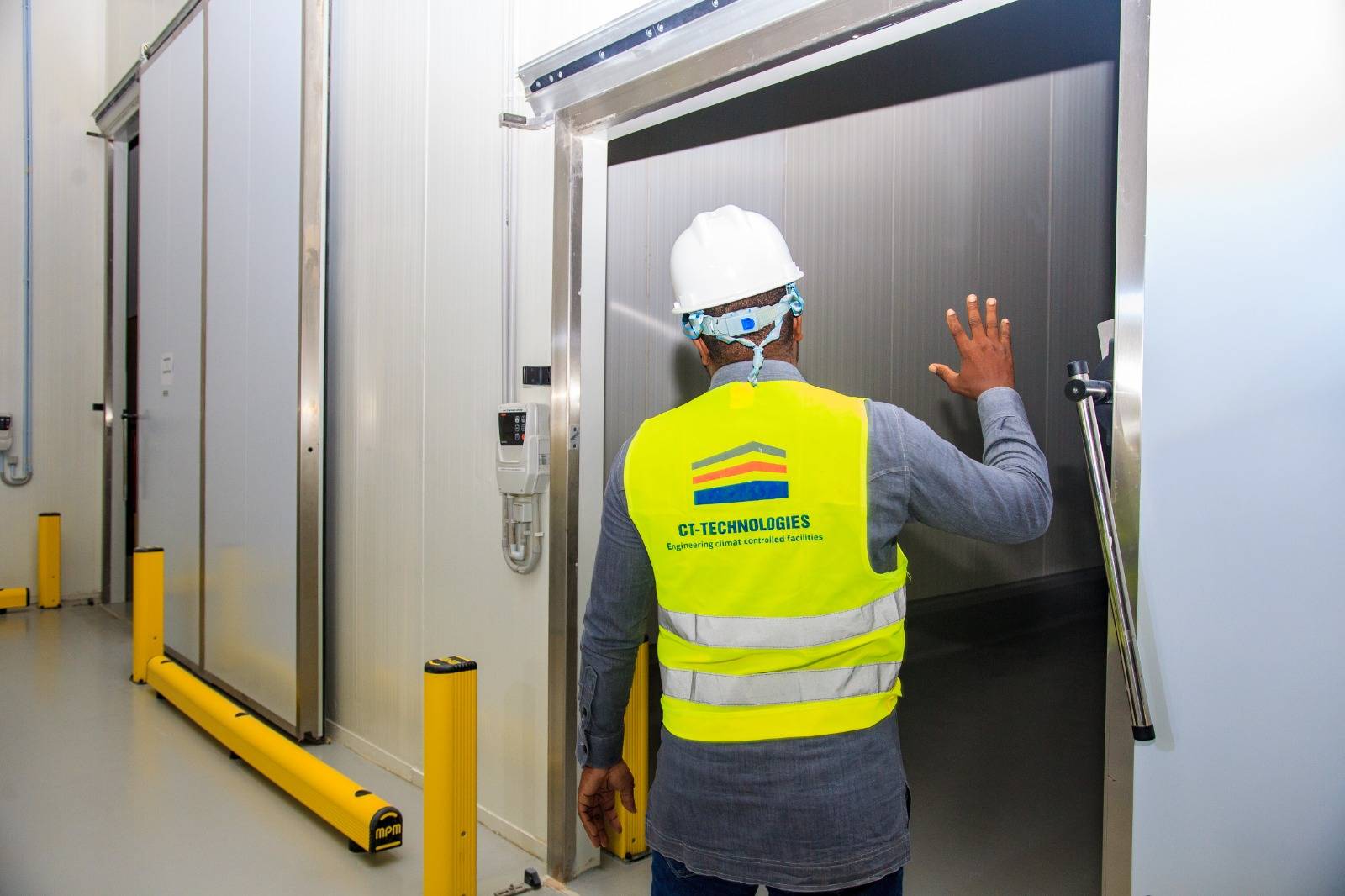
Producing premium-quality fruit is meaningless if perishable goods spoil on airport tarmacs. Enter PACOFIDE’s second pillar: a cutting-edge fruit terminal at Cotonou’s Bernardin Gantin International Airport.
This refrigerated logistics hub, equipped with cold storage chambers, blast freezers, and streamlined customs zones, can handle up to 736 pallets of fruit simultaneously. The financial upside is immediate: by preserving the cold chain from farm gate to aircraft hold, Benin slashes spoilage rates. Pineapple varieties like pain de sucre and fresh produce will reach European and Asian shelves with unmatched freshness, enabling premium pricing and stronger negotiating power.
Political will driving tangible progress
An official inspection on July 3 confirmed that construction timelines were being met with precision. Minister Bloukounon Goubalan highlighted the high standards of the completed structures, emphasizing Benin’s strategic pivot toward economic sovereignty: « Seeds are the foundation of production. By mastering seed technology, we fortify our competitiveness. Benin is taking control of its seed industry. »
This integrated approach—merging upstream scientific research with downstream logistics excellence—addresses decades-old structural gaps. It also reassures private investors and international partners, positioning Benin as a reliable, structured agricultural player on the global stage.
By linking Glo-Djigbé’s high-tech seed innovation with Cotonou’s efficient fruit terminal, the government is laying the groundwork for a resilient, export-driven agricultural economy. This industrial and scientific wager goes beyond volume growth; it aims to structurally transform the national economy. By owning its seeds and cold chain, Benin ensures that the wealth generated from its soil stays firmly in the hands of local actors. The green revolution in Benin is not just underway—it now has the technological firepower to dominate global markets.