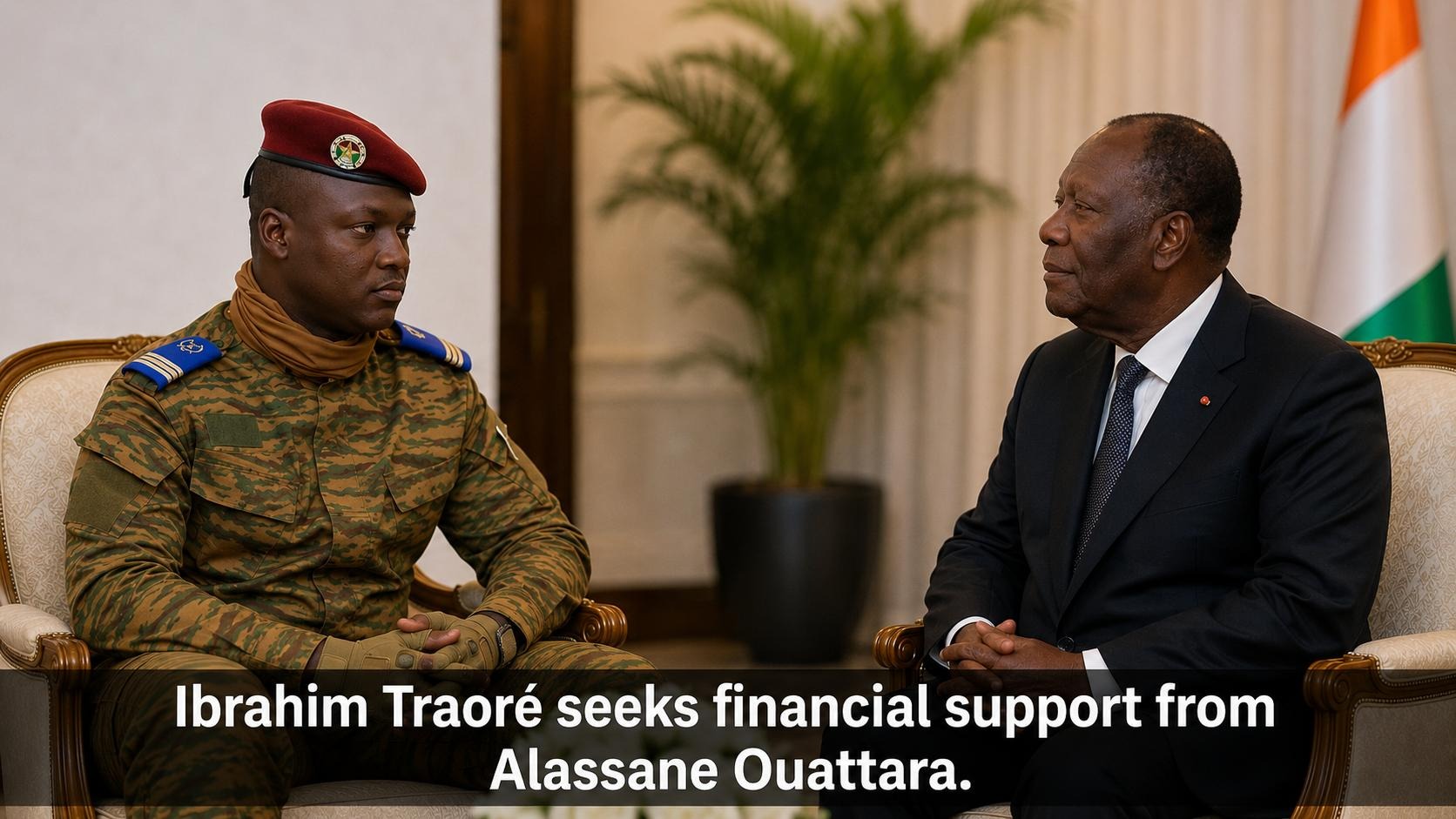
The transition government in Burkina Faso is facing a moment of reckoning. Despite the persistent rhetoric of total sovereignty and a clean break from traditional partners broadcast from Ouagadougou, a high-level official delegation has been dispatched to Abidjan. Their mission is clear: to secure urgent financial assistance from Côte d’Ivoire, signaling a budgetary impasse that the military leadership can no longer ignore.
Economic reality vs political rhetoric
The facade of total independence is beginning to crumble. While Captain Ibrahim Traoré has consistently championed a policy of complete autonomy from regional neighbors, the cold reality of national accounts has overtaken his narrative. By sending emissaries to request funds from Côte d’Ivoire, the leader of the Burkina Faso transition is effectively acknowledging that the state’s treasury is running dry.
This move toward the Ivorian neighbor is not a standard diplomatic exchange; it is a symptom of deep economic distress. Massive military expenditures combined with increasing diplomatic isolation have exhausted the nation’s resources. This has forced Ibrahim Traoré into a position of financial humility before a government he has frequently criticized in recent months.
A contradiction in principles
Seeking help from Abidjan places the transition leadership in a difficult ideological position. It is difficult to reconcile accusations that Côte d’Ivoire serves as a base for destabilization with the quiet solicitation of its public treasury to cover the transition’s mounting bills. This shift highlights several critical issues:
- Diplomacy of necessity: Despite sovereignist stances, Captain Traoré is being forced to align with economic realpolitik.
- Admission of internal limits: The reliance on the “Patriotic Support Fund” and various exceptional taxes has proven insufficient to keep the Burkina Faso state afloat.
The limits of the AES strategy
The reports of this mission are no longer mere speculation but reflect a financial management system under extreme pressure. By authorizing this fund-seeking mission, Captain Ibrahim Traoré risks weakening his own foundation of legitimacy. It becomes increasingly complex to advocate for the independence of the Alliance of Sahel States (AES) while simultaneously seeking a budgetary lifeline from ECOWAS powers that were previously rejected.
The presence of this delegation in Abidjan serves as ultimate proof that ideology has its boundaries. Ibrahim Traoré must now confront the fact that his strategy of total rupture was perhaps more of a facade than a sustainable economic model. Sovereignty cannot be maintained through television broadcasts alone; it requires solid financing. Today, Burkina Faso is knocking on Côte d’Ivoire‘s door to ensure its own survival.
Comments are closed, but trackbacks and pingbacks are open.