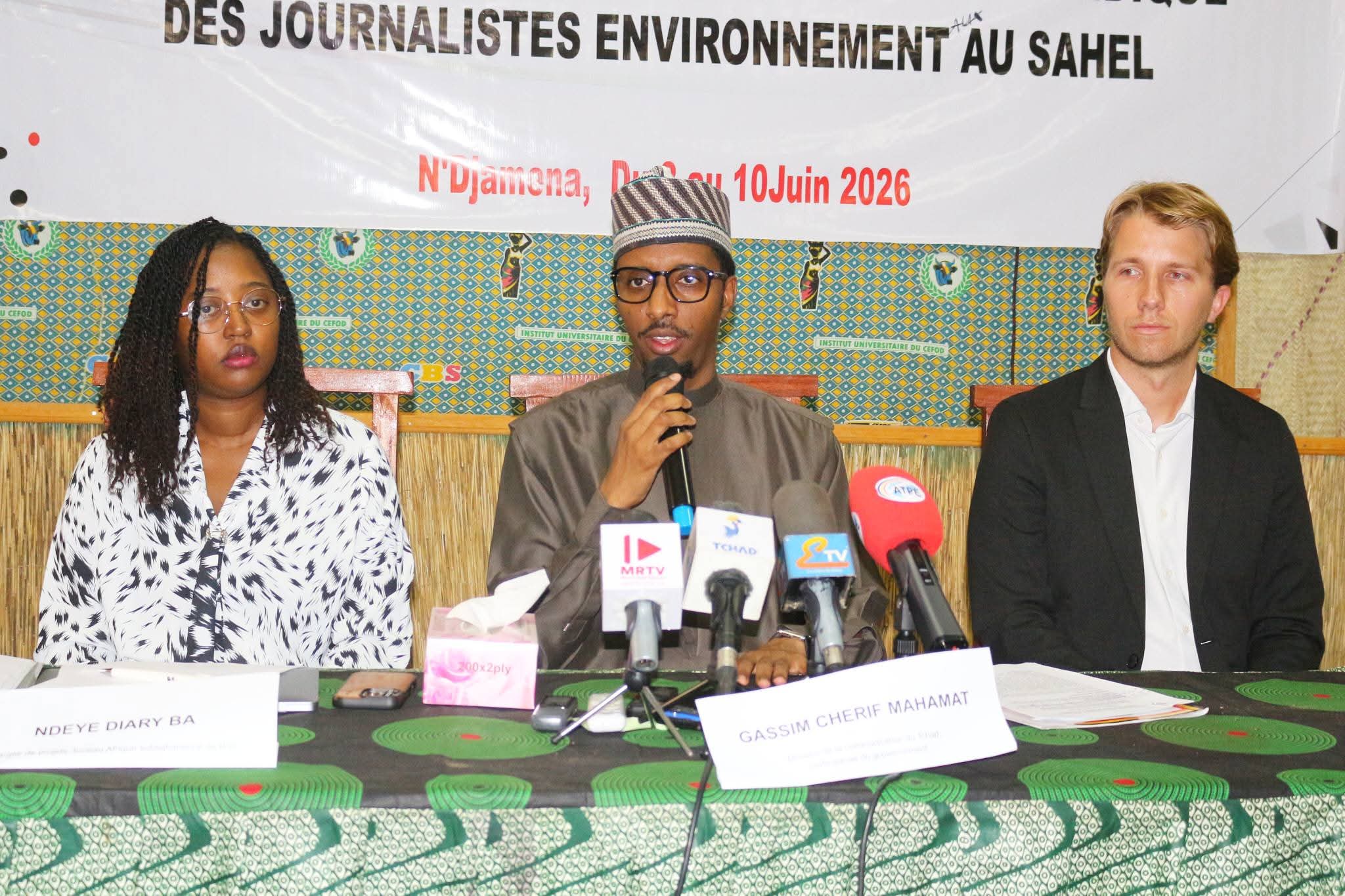
A three-day regional workshop focused on the legal protection of journalists covering environmental issues began on Monday, 8 June 2026, in N’Djamena. The event is organised by an international press freedom organisation in partnership with the ministries of Communication and Environment.
Bringing together around twenty media professionals from Chad, Burkina Faso, Mali and Niger, the workshop is part of the ‘Defend and Protect Environmental Journalism in the Sahel’ initiative. The project aims to improve working conditions for journalists reporting on environmental topics.
The main goal is to enhance participants’ understanding of their rights, existing protection mechanisms, and ways to prevent professional risks, while fostering stronger collaboration among journalists, legal experts, and human rights organisations.
Ndeye Diary Ba, the Sub-Saharan Africa project manager for the organiser, explained that the initiative aims to equip journalists with the skills needed to practice their profession under better conditions. “Participants will have the opportunity to discuss sensitive topics, review various national and regional legal frameworks, and improve their knowledge of digital security and risk management,” she stated.
Attending the workshop, the Minister of Communication and government spokesperson, Gassim Cherif Mahamat, commended the selection of Chad to host this regional meeting. He noted that Sahel countries face many challenges regarding journalist protection and press freedom. “Media professionals play a crucial role in raising public awareness about environmental issues, but they must also benefit from a framework that ensures their safety and protection. This training will provide participants with practical tools in risk analysis, understanding legal texts, and combating disinformation—skills that have become essential in modern journalism,” he said.
Over the three days, participants will share experiences and build capacity to better inform the public on environmental challenges while working in safer conditions.