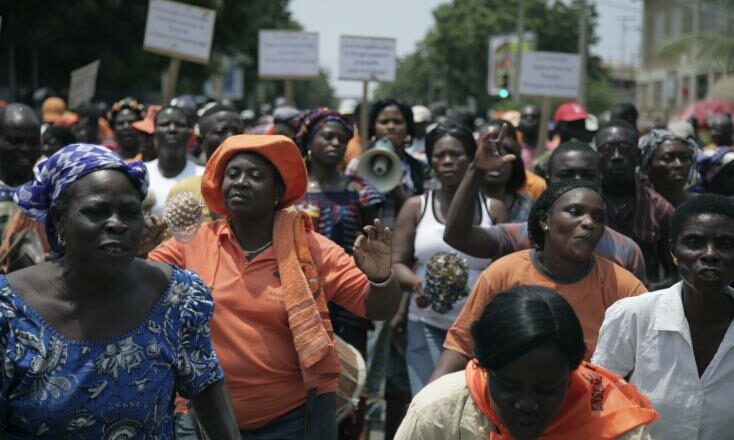
Hundreds of demonstrators took to the streets in Vogan, southern Togo, on Sunday to voice their opposition to the 2024 constitutional reform. Critics argue the changes are designed to extend President Faure Gnassingbé’s grip on power, a claim his administration denies.
Opposition coalition stages second major protest in months
The march, spearheaded by the Cadre national de concertation pour le changement au Togo (CNCC)—a coalition of opposition parties and civil society groups—marked the second large-scale gathering in three months. The first protest, held in early May, drew modest crowds, underscoring the challenges opposition movements face in mobilizing support.
Slogans highlight concerns over unconstitutional power grab
Protesters carried signs with messages such as “No to unconstitutional government changes” and “Constitutional coup d’état”, condemning what they describe as an illegitimate power grab. David Dosseh, spokesperson for the Front citoyen Togo debout (FCTD), one of the driving forces behind the demonstrations, emphasized the gravity of the situation. “The 2024 Constitution is entirely illegal. It represents a constitutional coup that the Togolese people will never accept,” Dosseh declared.
Key changes spark debate over democratic backsliding
The 2024 constitutional amendments introduced sweeping reforms, including the abolition of direct universal suffrage for presidential elections. Instead, the country transitioned to a parliamentary system, where the President of the Council—currently occupied by Gnassingbé—assumes the highest executive role. The president has held office since 2005, raising concerns about the reform’s true intent.
While the government frames the changes as a move toward greater institutional inclusivity, opposition figures and civil society groups argue the reforms are a calculated maneuver to perpetuate Gnassingbé’s leadership indefinitely.
Violent crackdowns and regional rebuke
Protests against the reform erupted in 2025, resulting in seven civilian deaths according to civil society reports, though prosecutors attribute five fatalities to drowning incidents. The unrest has intensified scrutiny of the constitutional overhaul.
In a landmark ruling on January 29, the Economic Community of West African States (ECOWAS) Court of Justice deemed the reform an “unconstitutional change of government.” The Togolese government swiftly rejected the verdict, asserting the court overstepped its authority by questioning domestic constitutional matters. Officials argued the court’s mandate is confined to human rights and community law compliance, not the legitimacy of national laws.